

Products
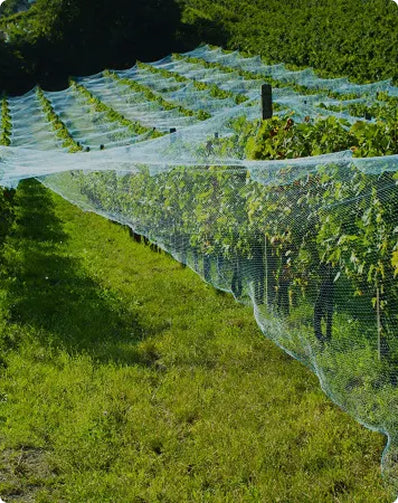
Protecting crops from hail
Climatic hazards are becoming increasingly intense and frequent, affecting more and more regions.
In any season, and especially in spring and autumn, a violent hailstorm can suddenly destroy entire plantations and harvests. A huge financial loss for farmers and arboriculturists. Apples, vines, pears, and olives are regularly damaged by hailstorms.
To reduce losses and increase the chances of a good fruit and vegetable production, the hail netting has proven its effectiveness.
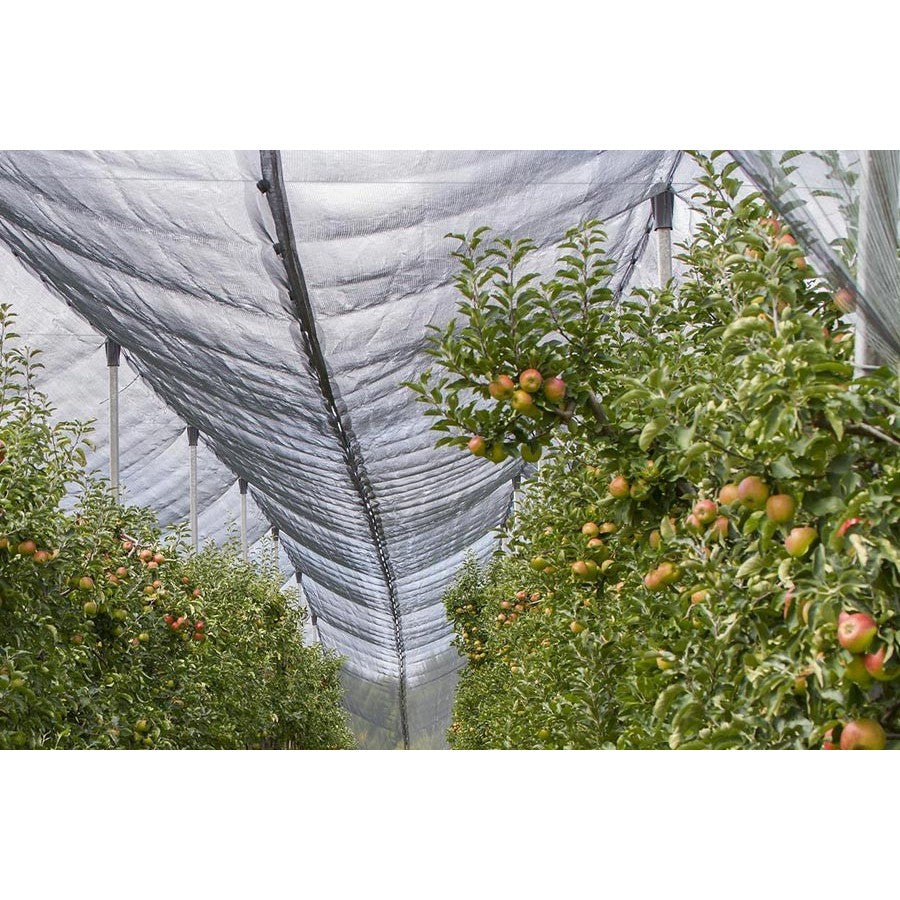
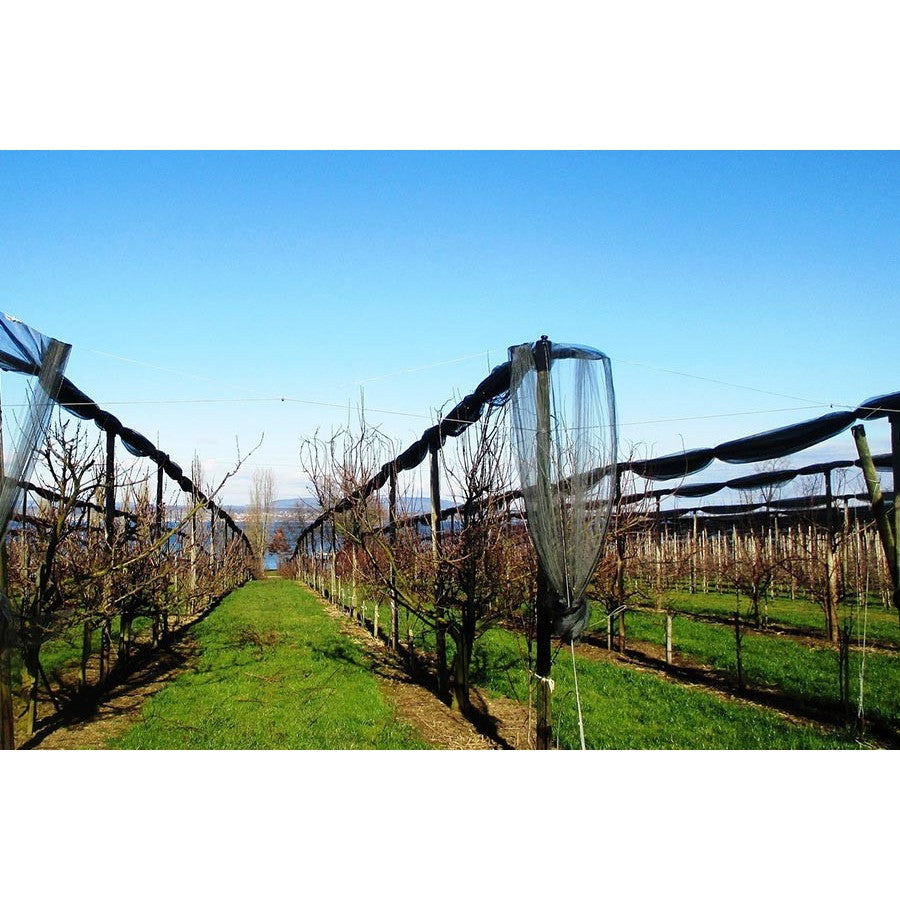
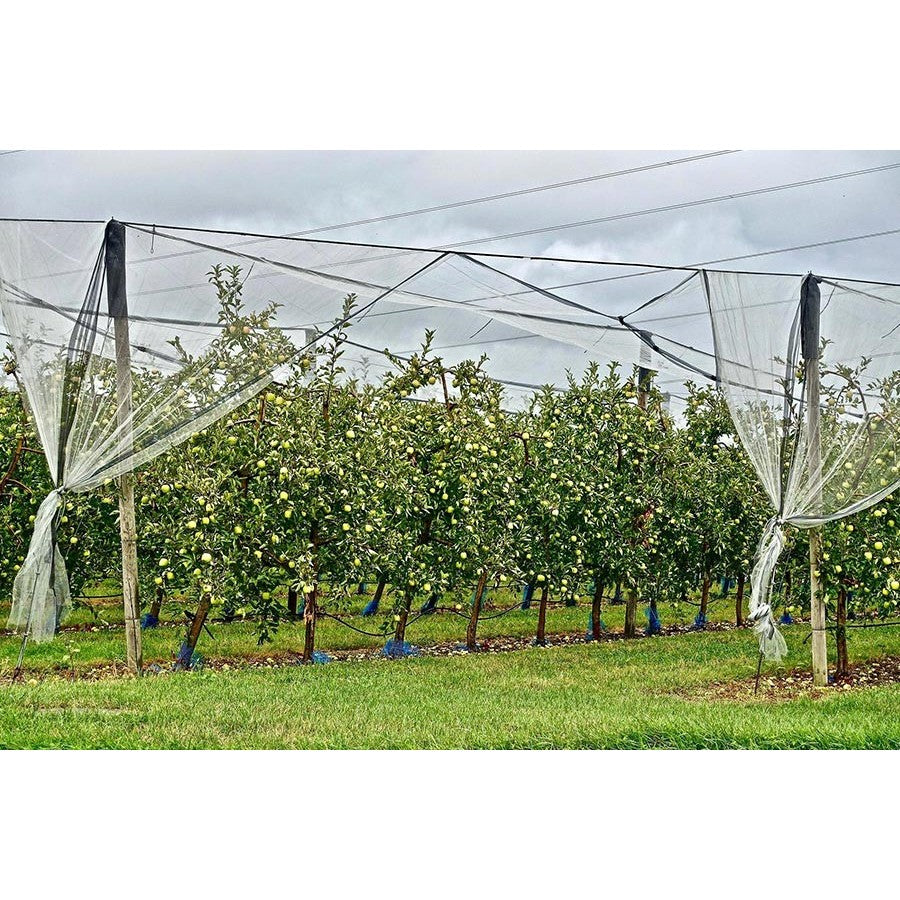
Suspended above crops, it absorbs the impact of hailstones and prevents them from damaging the fruit.
Low-shade hail netting
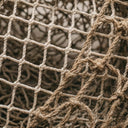
Our hail nets are made with 7 mm x 3 mm mesh. They are small enough to stop hailstones, but large enough to let natural sunlight through.
With a low shade of about 8%, these nets do not hinder the growth of trees and plants at all. Fruits can ripen and vegetables develop without hindrance.
This slight shading even provides a little protection against excessive heat during heatwaves or severe droughts, by slightly limiting the direct impact of solar rays on crops.
Other advantages of hail netting
Hail netting has many advantages:
- Absorbs the impact of hailstones and is not in direct contact with fruits or crops
- Long lifespan, 5 years on average thanks to UV treatment and quality manufacturing
- Economical, given that it protects crops and fruit trees for several years
- Provides slight protection for orchards against starlings and other birds, even if it is not as covering as a bird netting
- Usable in organic farming and does not require chemical treatments
- Protects against storms and very heavy rains by breaking up large water droplets.
Available in several colors, it adapts to your constraints to limit the visual impact on the landscape, particularly useful in tourist regions.
It is therefore a truly effective and profitable solution for arboriculturists, winegrowers and other agricultural professionals.
Packaged and shipped in large, uncreased rolls, it unrolls easily to cover crop rows.
Frequently Asked Questions
Your frequently asked questions for safe and effective use
Housing

Boating
Agriculture
Work and safety
Sports and leisure
DIY and Garden