




Products
Construction site safety net
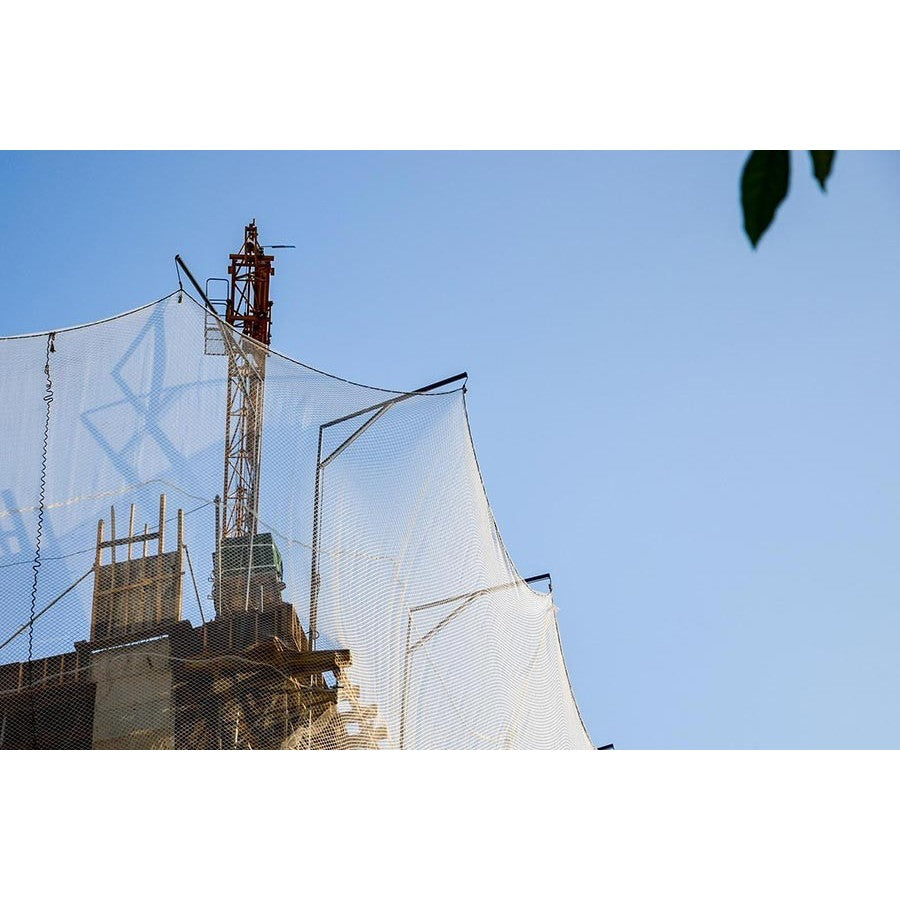
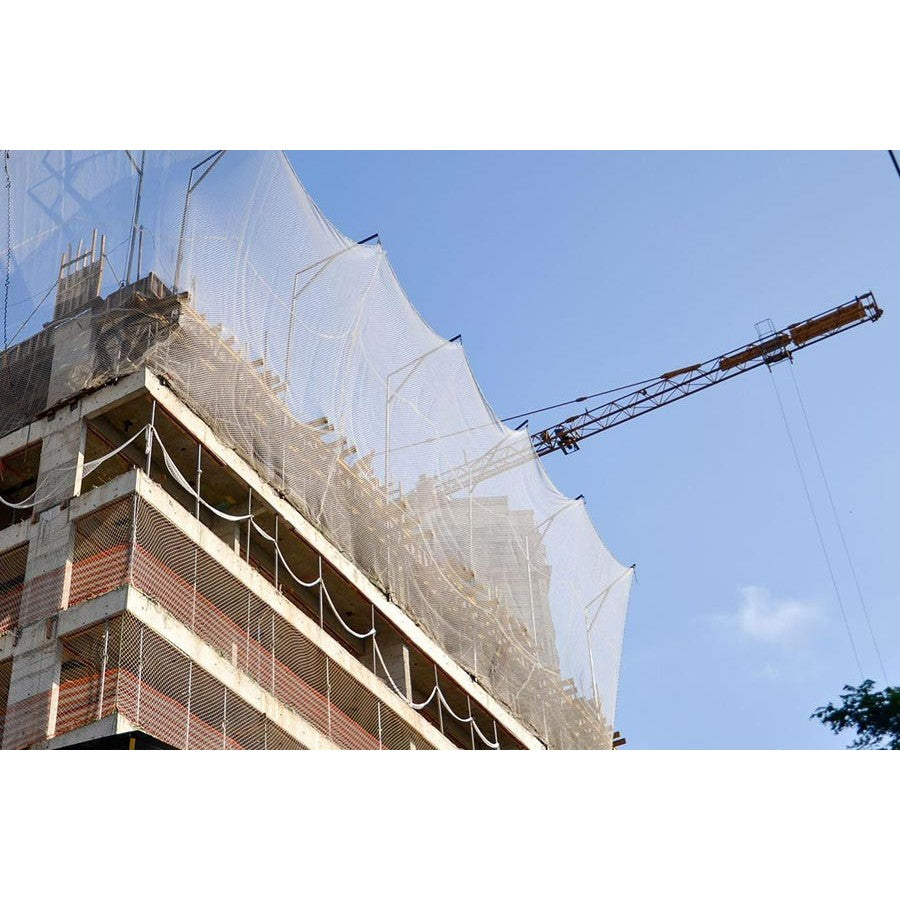
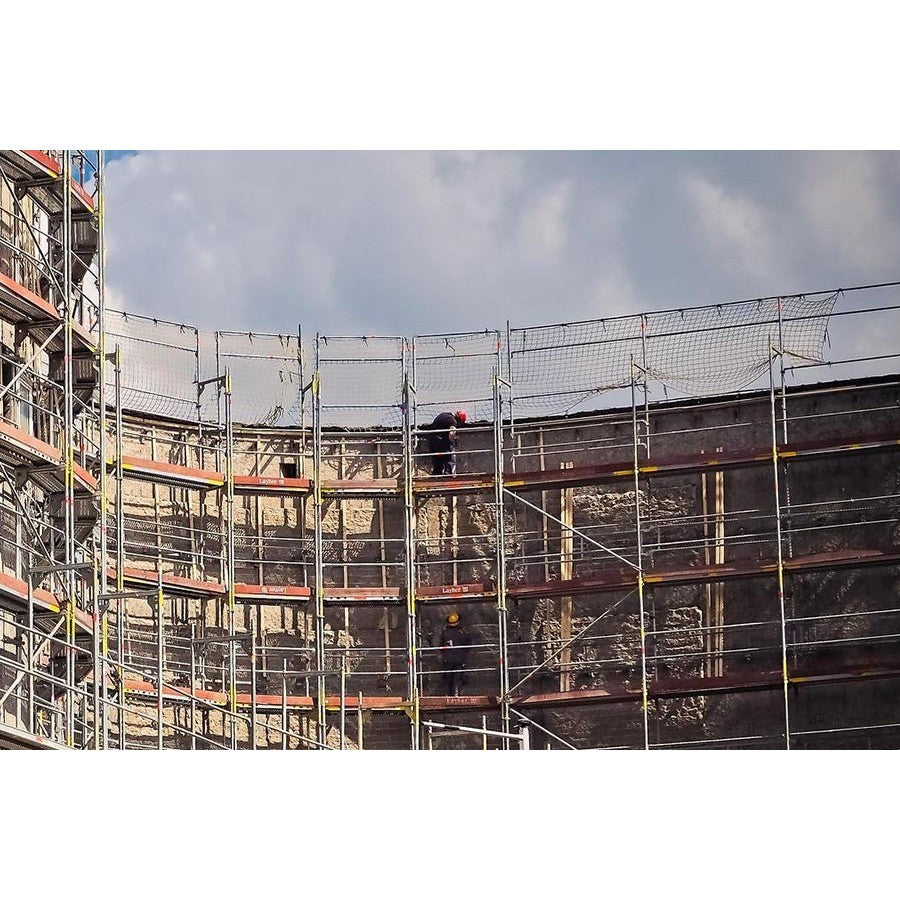
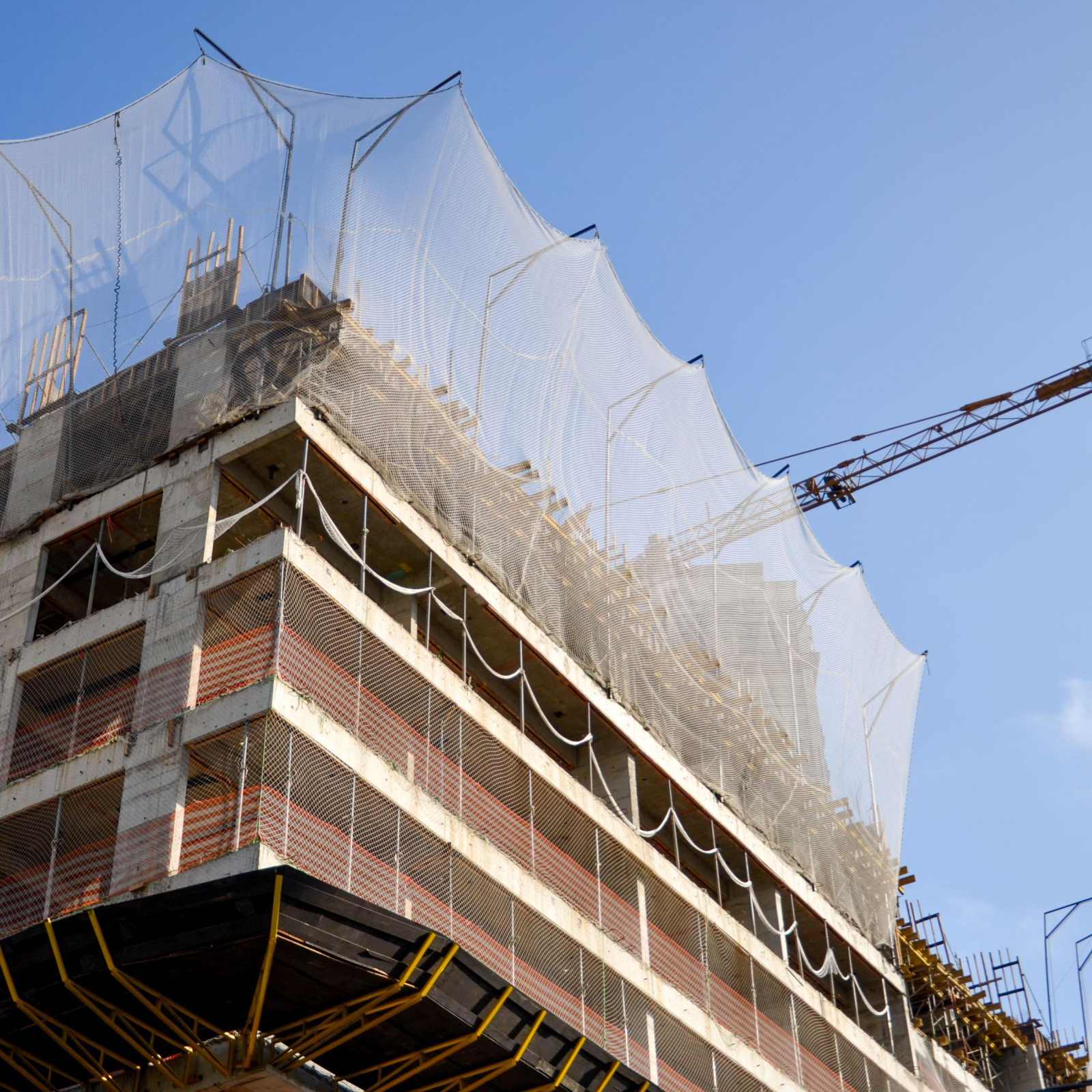
Construction companies and carpenters regularly work at significant heights, where the risk of people falling is very real with serious consequences.
The standard man-safe fall protection safety net provides effective protection to prevent the consequences of such a fall.
It is installed either vertically or horizontally, using different installation systems, depending on whether it needs to prevent a person from falling inwards or outwards of the structure.
Safety nets are also used in other sectors: industries, energy, maintenance, etc.
Wherever workers are required to work at height, the installation of a standard fall protection net prevents the risk of serious injury in the event of a fall.
EN 1263-1 standard man-safe fall protection
The European standard EN 1263-1 specifies the safety requirements that a man-safe fall protection net must meet, as well as the test methods.
This is to ensure the manufacture and circulation of equipment that provides real protection for people on construction sites.
Thus, a standard man-safe fall protection safety net must, in particular, meet the following characteristics:
- Be made with a cord composed of at least 3 independent threads, and in such a way that it cannot fray;
- Be protected against fraying at the ends;
- Have a selvedge that passes through each mesh all around the net;
- Not show a significant reduction in mechanical characteristics between -10°C and +40°C;
Our safety nets are class A2, with 100 mm meshes.
Note that the EN 1263-1 standard concerns the requirements for the man-safe fall protection net itself, without concerning the installation technique.
The standard that also covers the installation method for safety nets is EN 1263-2.
Use of fall protection safety net
This equipment is mainly used by construction companies and carpenters, whose workers work at height.
It does not prevent a person from falling. Its role is to prevent the serious consequences of a fall: serious injuries, disability or even death.
It does not in itself constitute complete safety against fall risks; other protective equipment must be used on construction sites: harnesses, helmets, safety belts, etc.
Debris protection net
Debris protection prevents tools or objects from falling, which could injure employees or passers-by near construction sites.
A loose stone or a falling hammer will thus be stopped, avoiding injuries and damage.
Debris protection is not subject to a standard, unlike safety nets.
Our fall protection safety nets can be combined with debris protection.
This way you secure your construction sites with double protection, against falling people and objects.
Regular inspection of the safety net
As a very important protective element for the safety of company employees, the net must be regularly and thoroughly inspected.
Remember to change the net if:
- It has defective meshes
- It shows wear of the fastening accessories, or of the selvedge
- The test mesh has low resistance
- The net has caught a falling person
This last point is essential to ensure the safety of workers in compliance with the European standard.
The fall protection safety net is for single use. If a person falls and is caught by the net, it must be replaced.
Guardrail protection net
The EN 1263-1 standard safety net can also be installed vertically, as fall protection at home.
This safety net can be installed on a balcony, a suspended terrace or a mezzanine to prevent people and pets from falling. It is then an economical alternative to the more high-end guardrail net often installed in homes.
Frequently Asked Questions
Your frequently asked questions for safe and effective use
Housing

Boating

Agriculture
Work and safety
Sports and leisure

DIY and Garden