What is a halyard on a boat?
Table of contents
The call of the open sea, the need for escape and freedom.
Being able to go out, travel, and enjoy nature. Do you want to buy a sailboat or embark on a pleasure trip, but the technical terms are still abstract?
We help you better understand the world of sailing.
Which rope is used to hoist sails?
The rope used to hoist sails on a boat is called a halyard.
To be more precise and use vocabulary more suited to the world of sailing, we don't actually talk about "rope." On a sailboat, or a boat in general, we talk about line or "bout" (pronounced with a soft "t").
The halyard is therefore a line used to maneuver the sails on a sailboat.
We use the halyard to hoist sails, to raise them along the mast, or to lower them.
There is 1 halyard per sail.
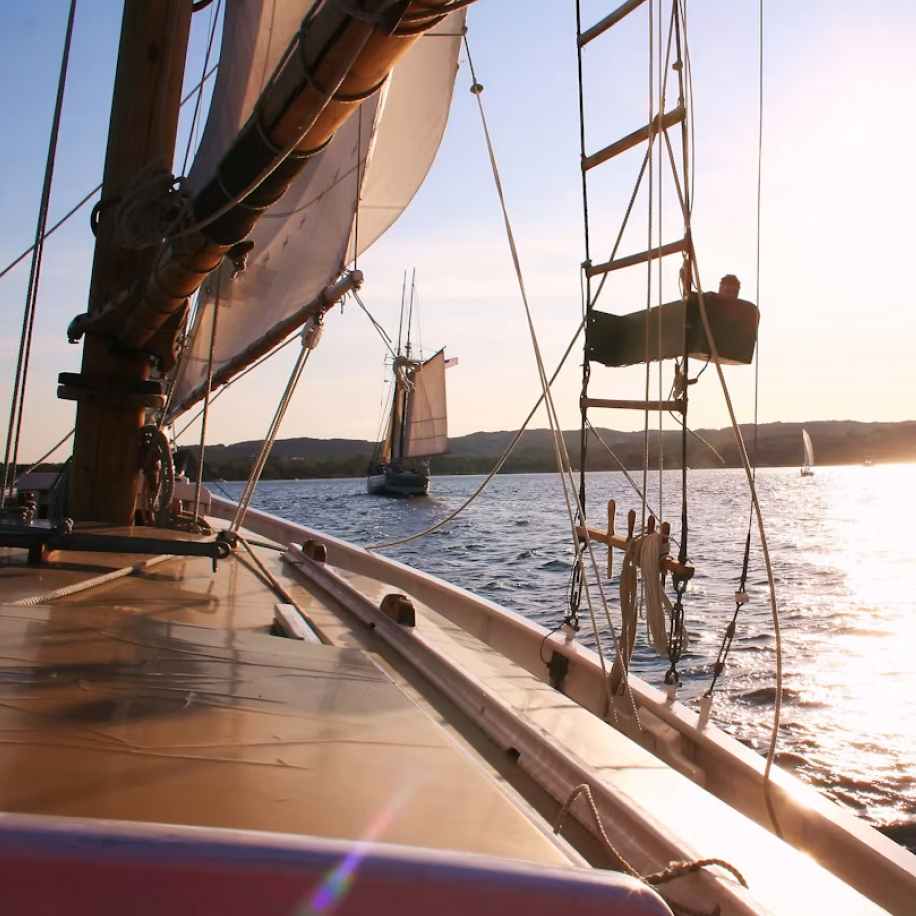
On tall ships, those historical wooden sailboats sometimes seen parading in ports, halyards are also used to hoist or lower yards: these are large elongated wooden spars that hold the sails.

Why is it also called braided?
This is simply due to the manufacturing method.
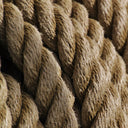
Originally, ropes were twisted, including for use on ships.
This means that the threads are assembled together by twisting.
Threads are twisted together, forming strands and then lays. Each time, twists are applied for these assemblies to manufacture a rope.
Problem: the more twists there are, the more the rope's strength is reduced.
To regain strength, one must then use increasingly thicker ropes.
A twisted rope is also harder to handle, as it is less comfortable for the hands when pulling on it to lift a load, hoist a sail, or simply secure an object.
Today, manufacturing techniques have greatly evolved.
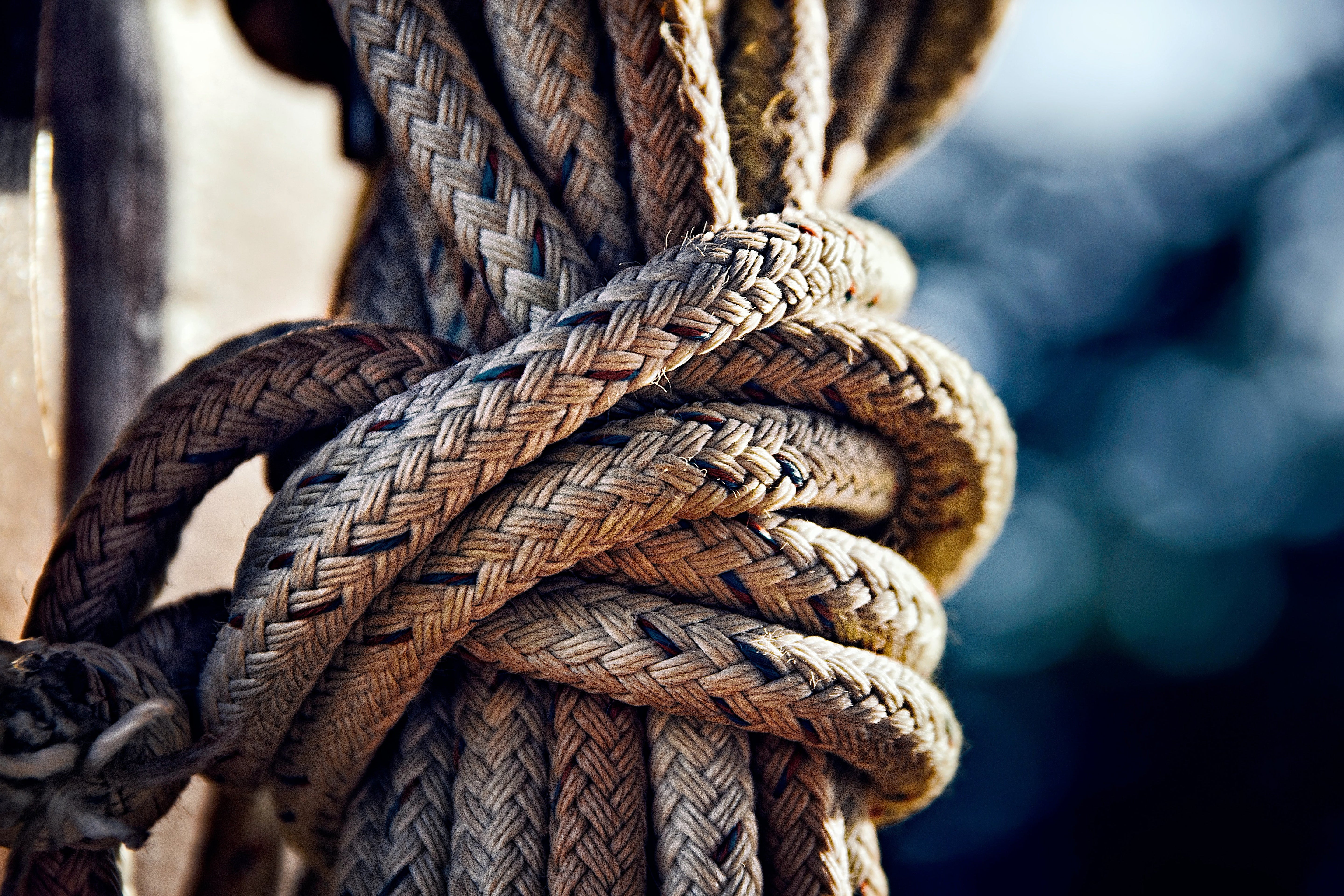
Marine ropes or those used in river navigation are now braided, and no longer twisted: so it's a braid.
Practical, efficient, resistant... braiding quickly became the norm for any activity where rope is needed.
Except for faithfully restoring an old wooden sailboat and preserving its historical appearance, any halyard purchased today is a braided line.
The different halyards on board
The more sails there are on the boat, the more halyards there are.
Generally, on small pleasure crafts, you will find 3 sails, and therefore 3 halyards.
This is the case if you go to sea aboard a small cruiser such as a First 25S, or a sailboat under 10m like the famous Feeling 920.
The line is named after the sail it is attached to.

Mainsail Halyard, or GV: this is the largest and main sail. It is located at the back of the mast, and it is the one that is most clearly distinguishable.
Spinnaker Halyard: the spinnaker, or "spi" for short, is a small, light sail at the front of the boat. When you see a ship at sea with a very full sail forward, that's the spinnaker.
Jib Halyard: the Jib is a headsail. You can also find a Genoa, which is a high-overlap jib, meaning it has a large sail area.
In racing, a Solent is more commonly found.
Why use different colored halyards?
Precisely because there are several sails on a boat.
Having different colored halyards makes it easy and quick to distinguish them, and to maneuver the sails more efficiently.
When you watch experienced sailors lower or hoist a sail, you might think it's child's play. Especially if it's a small sailboat with only 2 sails.
In reality, at sea, you sometimes have to react quickly to adapt to changes in weather and wind. Even more so during competitions and regattas.
If all the lines at the base of the mast looked the same, even with experience, time would be lost trying to find which halyard corresponds to which sail: less reactivity, more risk of errors...
With distinct colors, you only need a quick glance to identify the halyard that corresponds to the sail you want to maneuver.
Here are some explanations to make some technical terms easier to understand if you wish to embark on this adventure.
For any advice on choosing your halyards, our team is always available to assist you via the website, by phone, or on our Facebook page.