



5 things to know before buying your indoor net
Table of contents
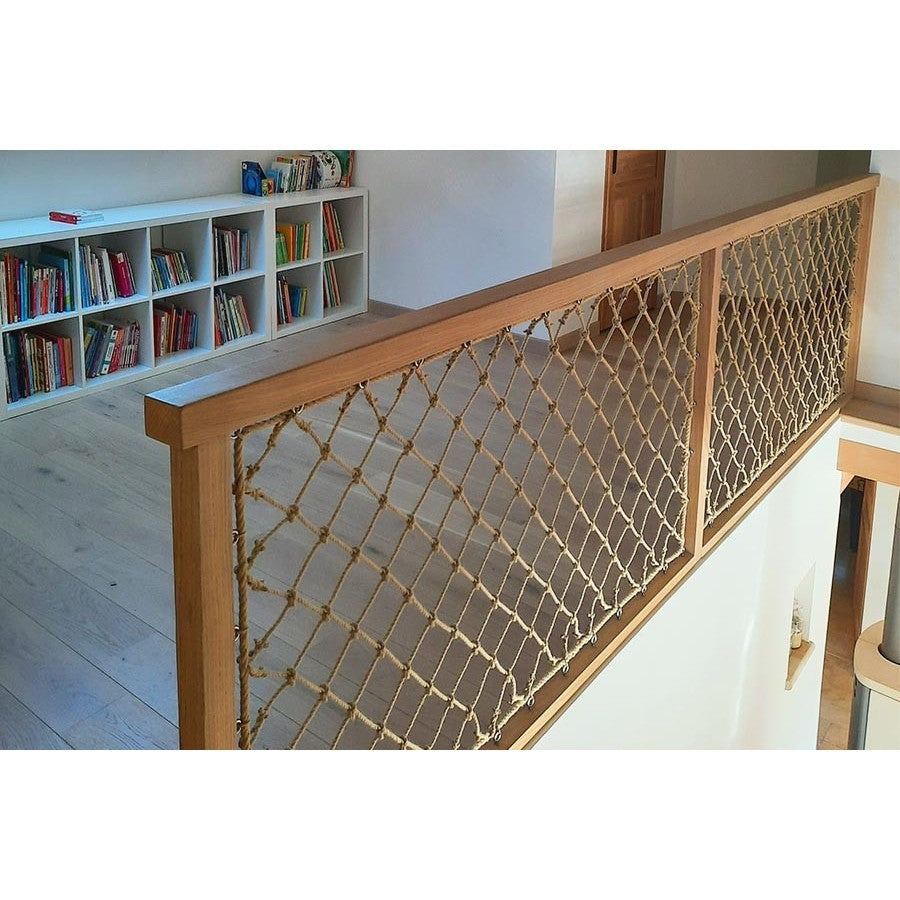
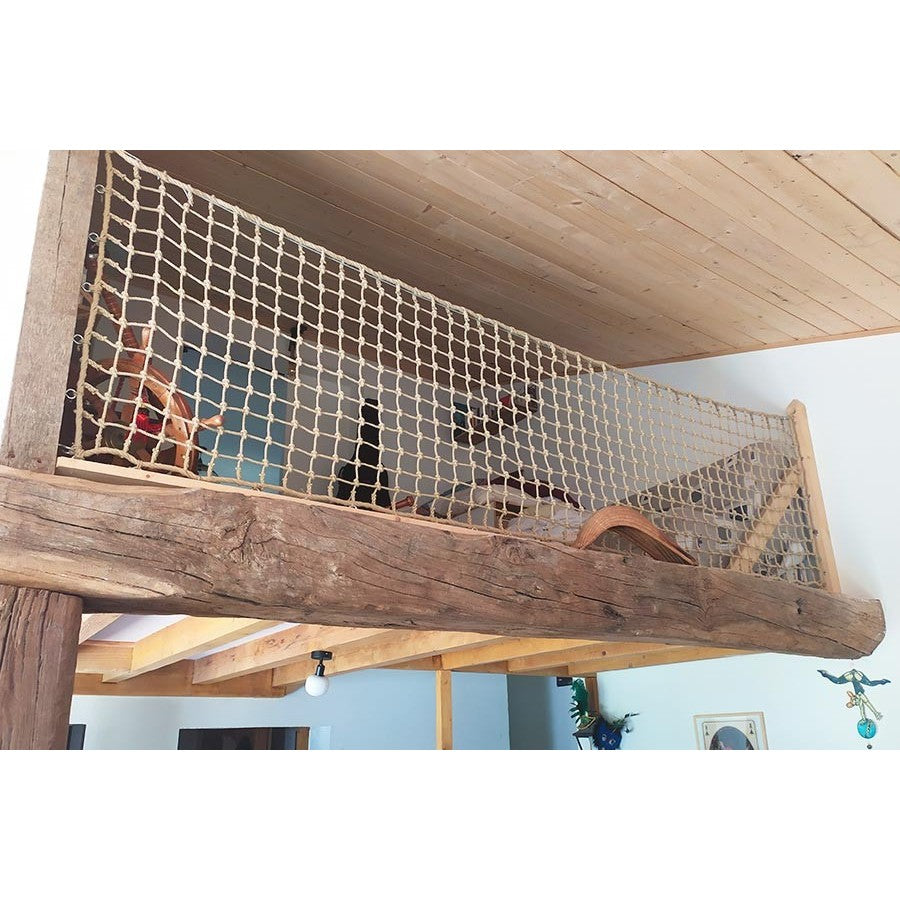
The indoor net is establishing itself today as both an aesthetic and functional solution in contemporary design projects. Whether it's a mezzanine net or a railing net, it optimizes space while providing a true architectural signature.
Behind this apparent simplicity, the choice of a net nonetheless relies on several technical criteria. Understanding them well ensures a result that is comfortable, durable, and perfectly integrated into your space.
Here are the essential points to consider before purchasing your indoor net.
1. The net material: a true indicator of quality
The material is one of the first elements to analyze, as it directly influences the net's behavior over time.
It affects:
- mechanical resistance
- durability over time
- comfort of use
- visual appearance
- mesh size.
The most commonly used materials are:
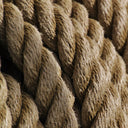
- Polyamide (nylon): flexible, resistant, and pleasant to use, it is particularly suitable for residential nets, especially for relaxation areas.
- Polyester: comfort is similar to polyamide, but the breaking load per square meter is slightly lower. It is suitable for vertical and horizontal surfaces.
- Polypropylene: versatile for indoor and outdoor use, it will tend to stretch more than polyamide and polyester.
In practice, polyamide remains a benchmark for versatile use.
Beyond the material itself, it is useful to consider:
- the section of the braids
- the quality of the braiding
- the peripheral finishes
These elements determine the overall strength of the net and its ability to maintain its performance over time.
2. Breaking load: a key point for safety
The breaking load is an essential technical data point. It corresponds to the maximum weight the net can support before breaking.
Why is this crucial?
An indoor net is not just a decorative element. It can be used for lounging, moving over an empty space, or as a play area for children.
It must therefore be able to support several people safely.
Understanding how breaking load is calculated
A suspended indoor net is not judged solely by the strength of its thread, but by its overall design:
- diameter and material of the ropes
- mesh size
- quality of assemblies (knots or braiding)
- peripheral boltrope (edge reinforcement)
Two types of indications may be encountered:
- Resistance per mesh: This corresponds to the capacity of a single cell of the net. It is interesting data, but it remains localized.
- Resistance per m²: This gives a more global view, integrating the net's density (mesh size, rope diameter, type of assembly).
As an indication, a quality residential net should support several hundred kilograms per m², ensuring effective fall protection.
Tip: When purchasing a vertical net, make sure to choose a mesh size suitable for your use. Opt for small meshes to prevent objects from passing through, especially for children.
It is recommended not to choose a vertical net mesh larger than 50 mm so that it cannot be climbed by a child.
3. Installation: a point to anticipate from the outset
Contrary to what one might think, installing an indoor net does not necessarily require a professional. In most cases, it can be done DIY... provided you are well prepared.
For a renovation project, prioritize stable and resistant supports, such as concrete, a metal structure, or wood.
Installation on a wooden structure is possible provided that the beams are properly sized and in good condition. Since the traction exerted is mainly lateral, an insufficiently sized or irregular structure could lead to deformations. As wood can also work over time (hygrometric variations, loading), regular checks remain recommended to ensure the stability and appearance of the installation.
4. Dimensions: precision above all
An indoor net must be perfectly adjusted to the space to guarantee good tension, an aesthetic appearance, and optimal safety.
How to take accurate measurements?
- Measure the opening accurately (length + width)
- Check for squareness (right angles or not)
Imprecise measurements prevent optimal adjustment and can make installation ineffective or impossible.
Custom-made vs. standard net
There are "ready-to-install" nets, often sold at low prices. But in most cases, they are not suitable, which does not allow for correct tension. For use as a suspended net, they can be dangerous.
Custom manufacturing is highly recommended for an indoor net. It ensures perfect adaptation to your space and thus guarantees optimal load distribution.
5. The fastening system and net tension
A good indoor net does not rely solely on the quality of the braid. The lacing and fastening system plays an equally important role.
Different types of fastening
Depending on the support you wish to attach your indoor net to, you will need to use appropriate fasteners.
There are several technical solutions, but the choice should not be based solely on aesthetic criteria. It depends primarily on the project configuration:
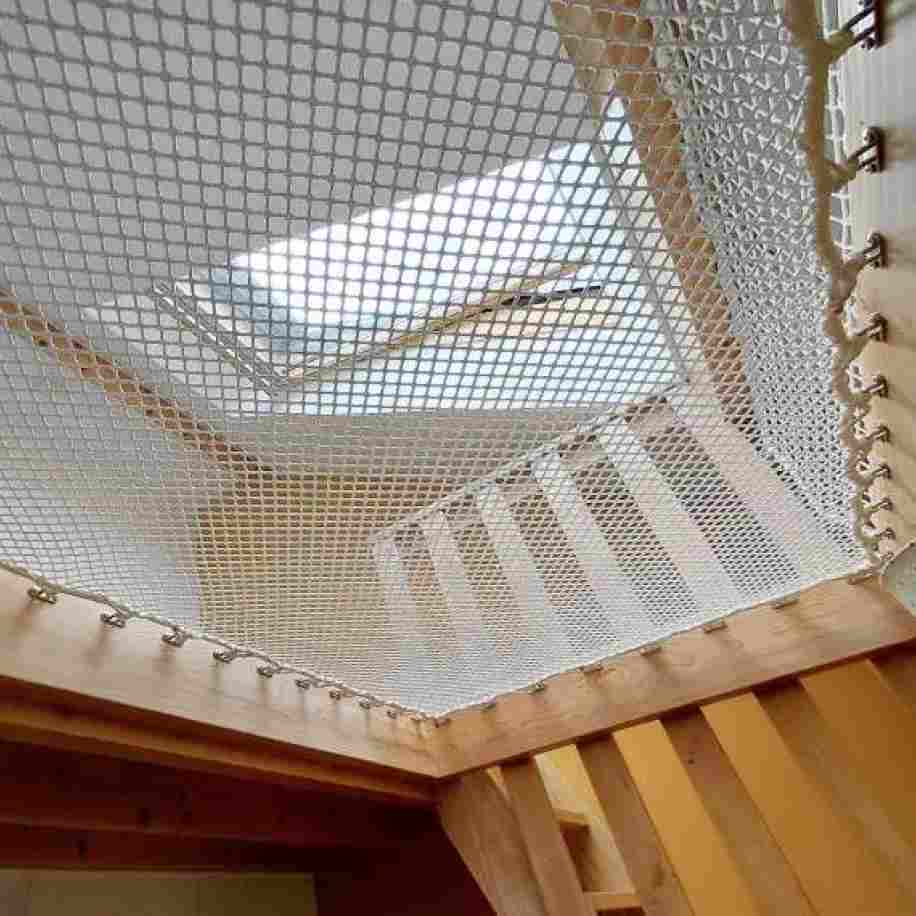
- Eyebolts with peripheral lacing: This is the most common solution. It allows for good load distribution and adapts to most supports (concrete, wood, metal).
- Metal plates: Used when anchor points need to be reinforced or transferred to a specific structure.
Good to know: The number of fastening points varies depending on the manufacturer. It is calculated based on the net's dimensions, material, and the load it can receive.
Tension ropes
For an indoor net to be both stable and comfortable, tension ropes precisely adjust the net's tension.
This is where the boltrope (rope running around the net) and the whipping (seam that attaches each net mesh to the boltrope) come in.
Tension ropes help distribute forces, which is essential for large horizontal nets.
Mistakes to avoid
Purchasing an indoor net should not be taken lightly. Behind its apparent simplicity lie important issues of safety, comfort, and durability.
Certain mistakes are very common in projects:
- ❌ Buying a net without checking the material
- ❌ Ignoring the breaking load
- ❌ Neglecting installation constraints.
- ❌ Choosing an unsuitable standard net
- ❌ Taking incorrect measurements
By taking our advice into account, you ensure a reliable choice adapted to your project.
Need help? Our experts will assist you in designing your project. Contact us


Cited in this article