



What bird should I put in an outdoor aviary?
Table of contents
Birds for outdoor aviaries
A large number of birds and poultry can be housed in an outdoor aviary.
To do this, you need to choose species that are comfortable with the region's climate, that get along with each other, and that have enough space to meet their needs.
Ornamental Birds
First, we have ornamental birds.
These are birds that are bred for their song, plumage, and for the love of a particular species.
Generally, these are small, straight-billed birds:
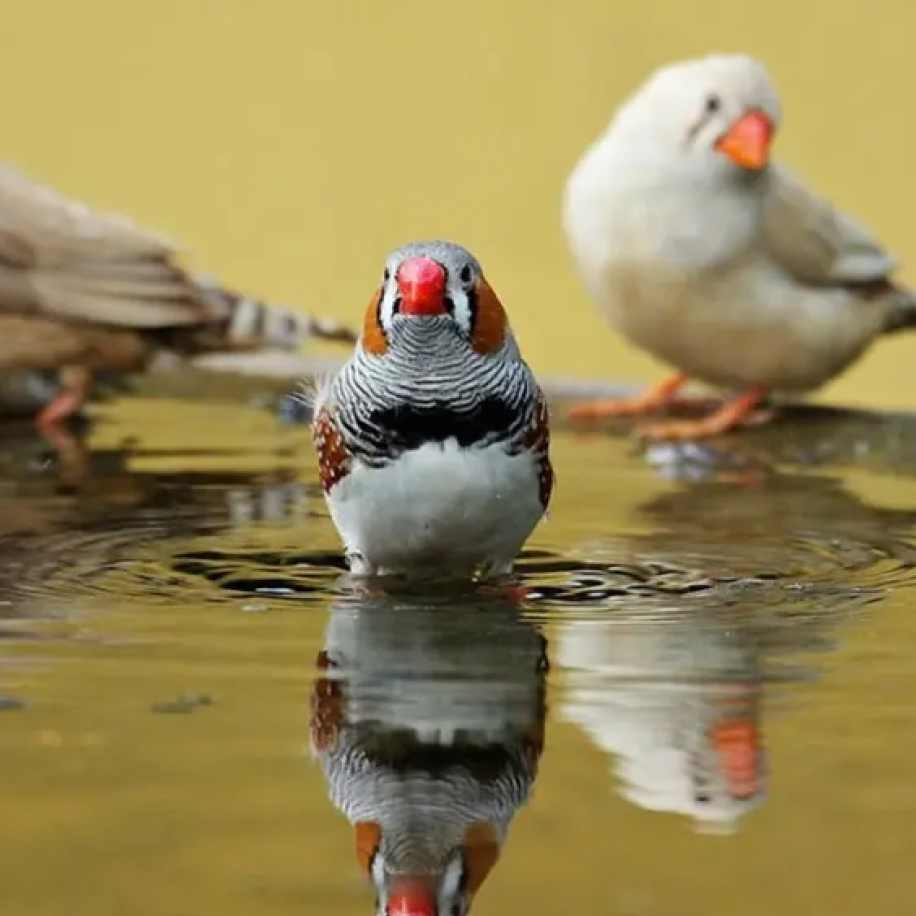
- Zebra Finches
- Canaries
- Java Sparrows
- Red-headed Finches
Or hook-billed birds:
- Cockatiels
- Bourke's Parakeets
- Budgerigars
- Lovebirds

You can also create large aviaries for very different species.
Enthusiasts will appreciate, for example:
- Golden Pheasant
- Isabella Golden Pheasant
- Reeves's Pheasant
- Doves
- Turtledoves

Poultry and barnyard animals
On the other hand, there are more common poultry for a barnyard.
This allows for quality, healthy food whose origin is completely controlled.
Some species, for example, lay eggs almost all year round (Red Hen), while others will allow you to enjoy excellent, very rich eggs for more specific periods (this is the case with geese).
In a barnyard, you can find several species of poultry:
- Chickens
- Ducks
- Geese
- Turkeys
- Quails

All these animals need a large space, to be able to scratch the ground or eat grass, or even to bathe. Hence the interest in providing them with a large outdoor aviary.
Outdoor-reared birds
For your birds to adapt well to life in an outdoor aviary, it is preferable to buy birds that have been raised outdoors.
Indeed, chicks or young birds raised indoors, in warmth and not accustomed to bad weather, may not tolerate the transition to an aviary.
Wait until temperatures are mild
Do not install new birds or poultry in your outdoor aviary in winter.
As long as temperatures are too low, day and night, the cold can be fatal to birds. They need time to acclimatize between their breeding ground and your aviary, which will be their new home.
Wait until temperatures are milder, in spring, to add new birds or poultry to your outdoor aviary.
Their acclimatization will then be gentle and more pleasant for the animals.
The size of the outdoor aviary
The well-being of animals is essential, and for this, it is imperative to create an aviary large enough for them.
The size of the aviary will depend on the species or species you are going to introduce, as well as the number of birds.
For example, allow at least 6m2 per pair of pigeons, or at least 30m2 of grassy area for a pair of geese or ducks.
The more animals you have in your aviary, the larger it will need to be.
Height is also important.
For chickens, you can create an enclosure with a closed top and a limited height.
For pigeon breeding, plan for at least 2.50m in height, with perches, so that they can fly and stretch their wings.
Species that can coexist
Not all birds are meant to live together.
To avoid fights and conflicts, you need to be careful about the different species of birds you want to introduce into your outdoor aviary.
Hookbills and Straightbills
In most cases, it is best to avoid mixing hook-billed and straight-billed birds in the same aviary.
Hook-billed birds are parrots or parakeets: African Greys, Lovebirds, Budgerigars, Cockatoos…
Note that even among hookbills, it is not recommended to mix species. It is important to pay close attention to the needs of each bird.
Straight-billed birds are generally smaller birds with straight beaks: Java Sparrows, Canaries, Zebra Finches, Doves…
Size and temperament of birds
Try to bring together in the same aviary birds that have similar size and temperament.
Large birds could easily attack smaller congeners.
Similarly, some species claim their territory and do not easily tolerate other individuals, while some birds are calmer and more docile.
Poultry
Different species of poultry, such as chickens, ducks, geese, and even quails, can coexist very well in the same aviary.
These animals are often found together in barnyards. An outdoor aviary offers more space for poultry than a simple chicken coop.
Other poultry have different temperaments, and it may be preferable to separate them, such as turkeys, guinea fowl, or pheasants.
Advantages of an outdoor aviary
An outdoor aviary offers numerous advantages for your birds.
They are outdoors and benefit from the natural conditions necessary for their well-being: natural sunlight, fresh air, soil on the ground that can be scratched and pecked, etc.
An outdoor aviary also provides much better ventilation to avoid bad odors (droppings, food, etc.).
Depending on how you design and arrange it, poultry and birds can run on fresh grass and climb various objects such as rocks, tree branches, or ropes.
Suitable aviary nets
To create an outdoor aviary that is well-suited to your birds or poultry, you should choose a quality aviary net.
Prefer a net made with braided and knotted meshes; they are more robust than knotless woven meshes.
It is also very important to choose the right mesh size for the aviary net.
The larger the birds, the wider the meshes can be.
For ducks, geese, or chickens, choose an aviary net with knotted meshes of 50mm.
Our products are designed to withstand several years outdoors: the textile fiber used for manufacturing is rot-proof (it does not rot with rain) and is treated against UV rays.