



Products
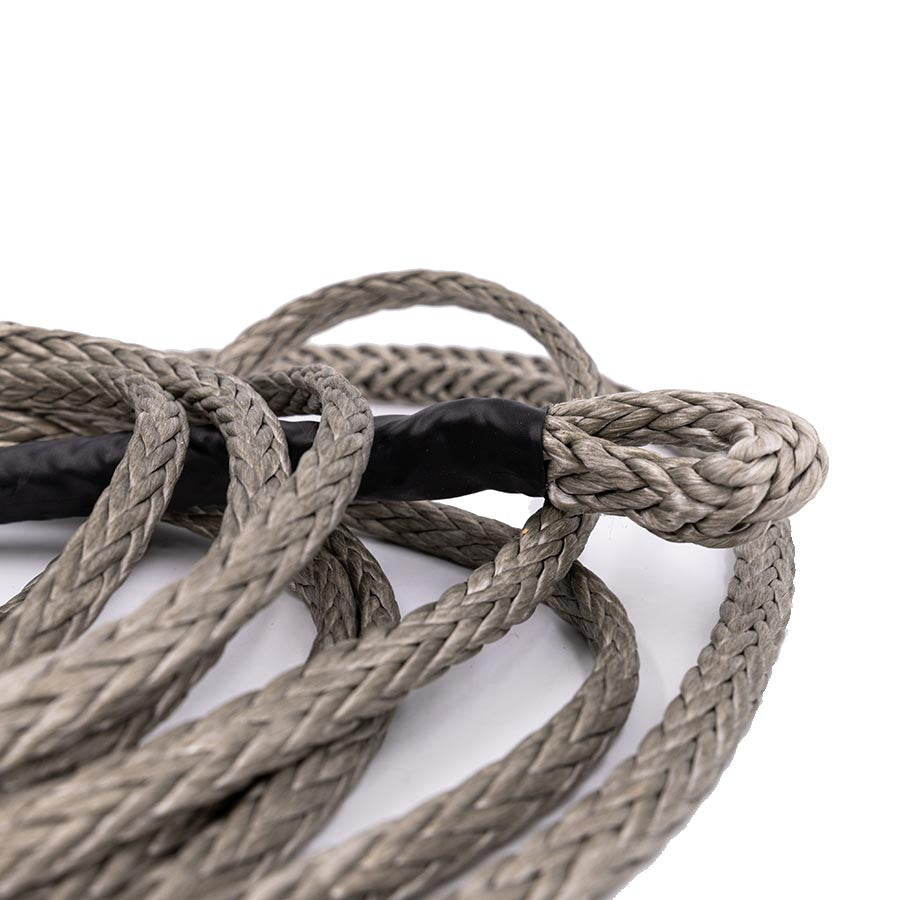
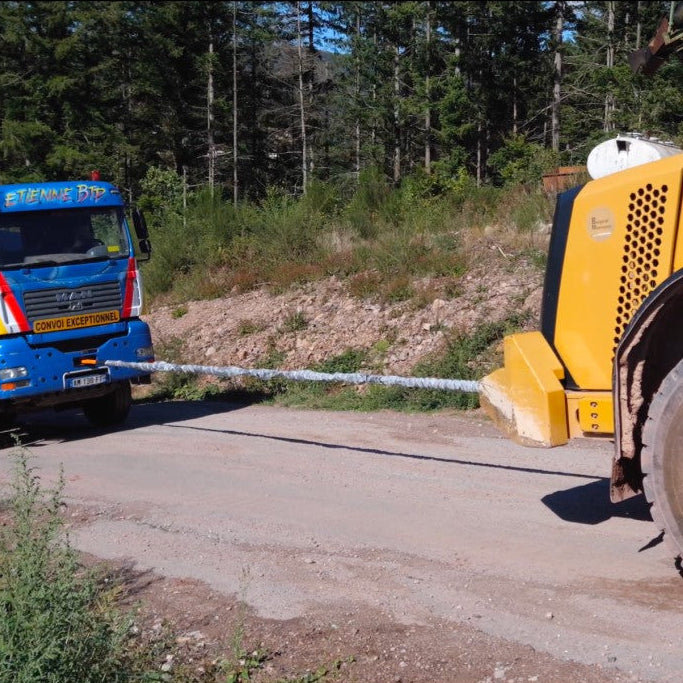
Here you will find a range of accessories and equipment for your heavy load transport and handling operations.
This traction equipment is used on construction sites, in logistics, or for towing vehicles during breakdowns.
Towing sling and kinetic rope
The difference is significant, and a towing sling should not be used for lifting. Whether you are a professional or an individual, safety during handling is your priority.
4x4 Model
For towing small vehicles or 4x4s, we offer two main categories of products.
The flat traction strap, specially designed for 4x4 towing, has a towing capacity of up to 12 tons. Made of polyester, woven and sewn in our workshops, it will effortlessly pull a stuck vehicle out of mud or a ditch.
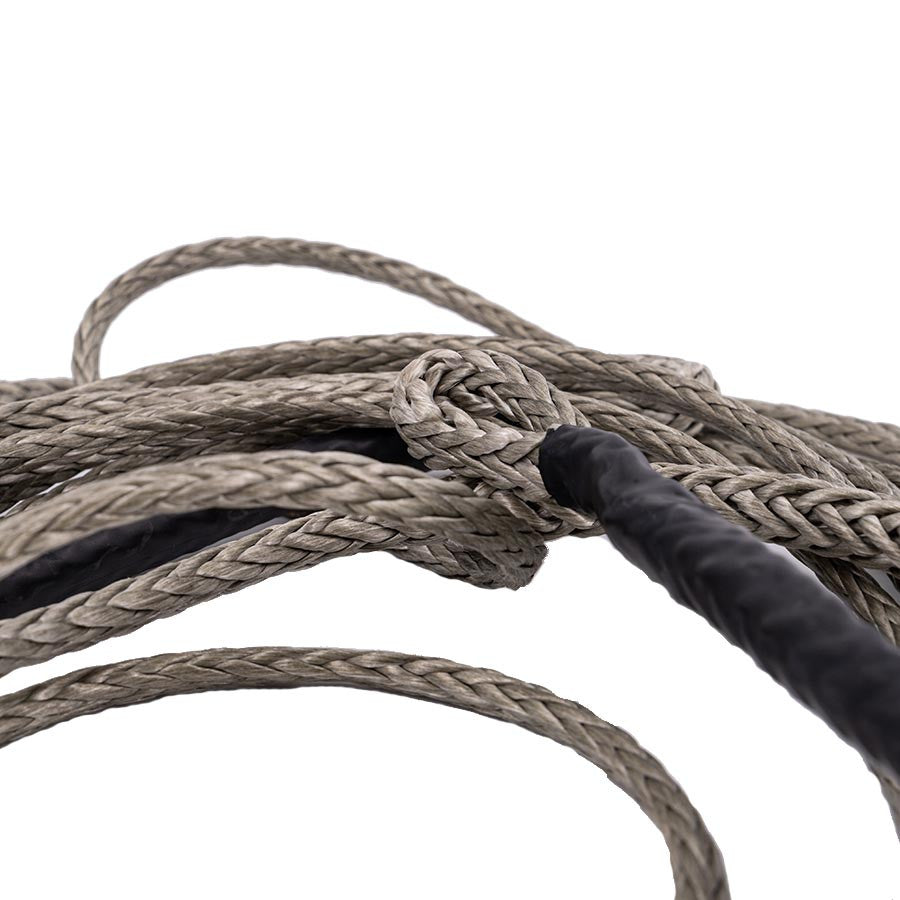
We have also developed our own kinetic rope for adventurers: the Megatrack 4x4 range.
Designed to store the energy of the towing vehicle and gently release it to the towed vehicle, without jolts or shocks, optimizing the kinetic energy provided during traction: less effort, more flexibility and efficiency. Available for towing capacities from 5 to 15 tons.
Heavy-Duty Model
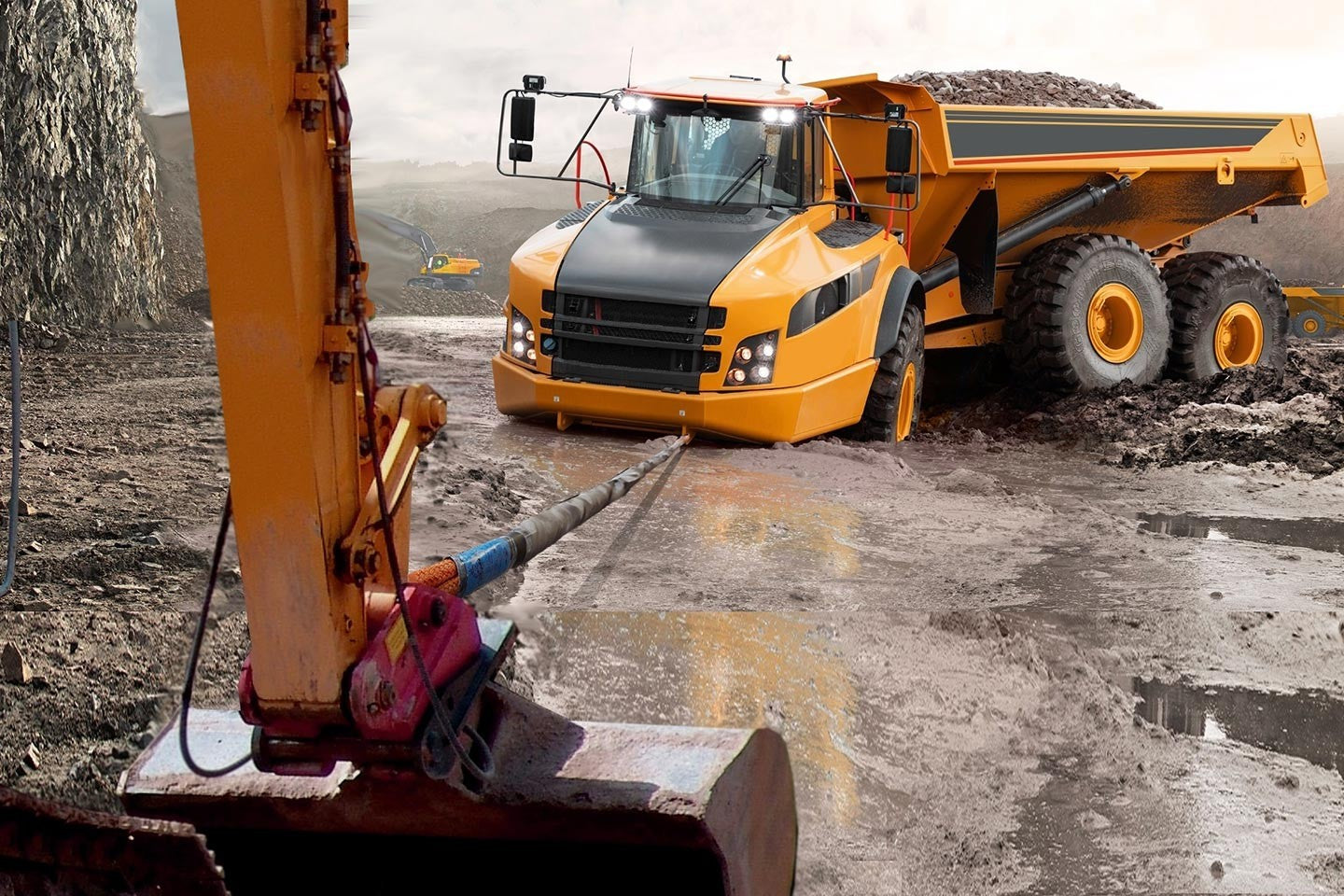
On construction sites and in public works, machinery can quickly get stuck in mud or sand.
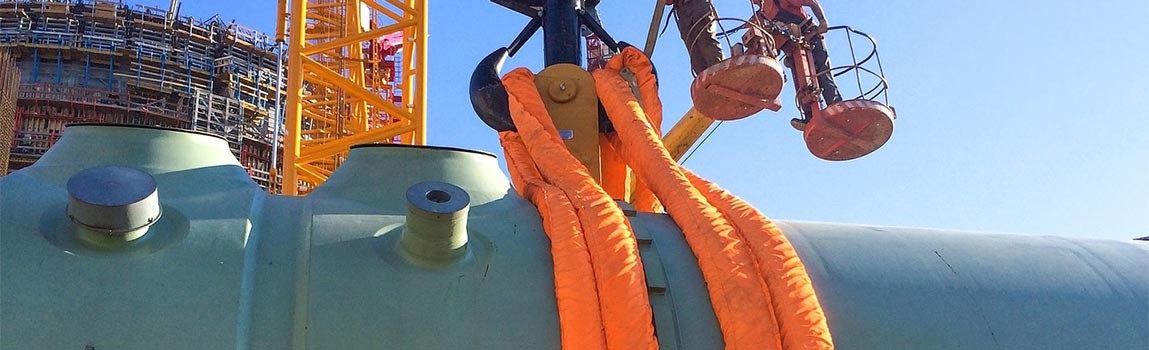
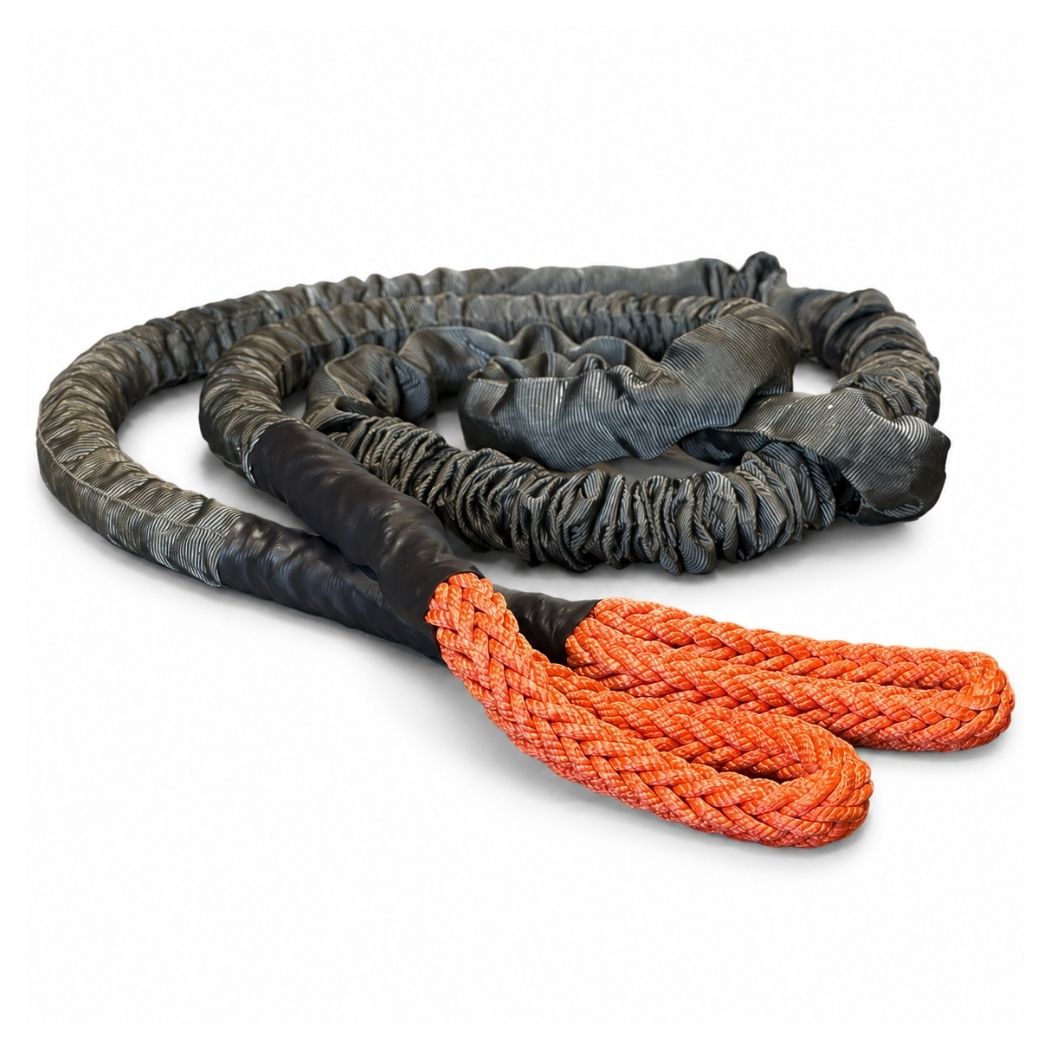
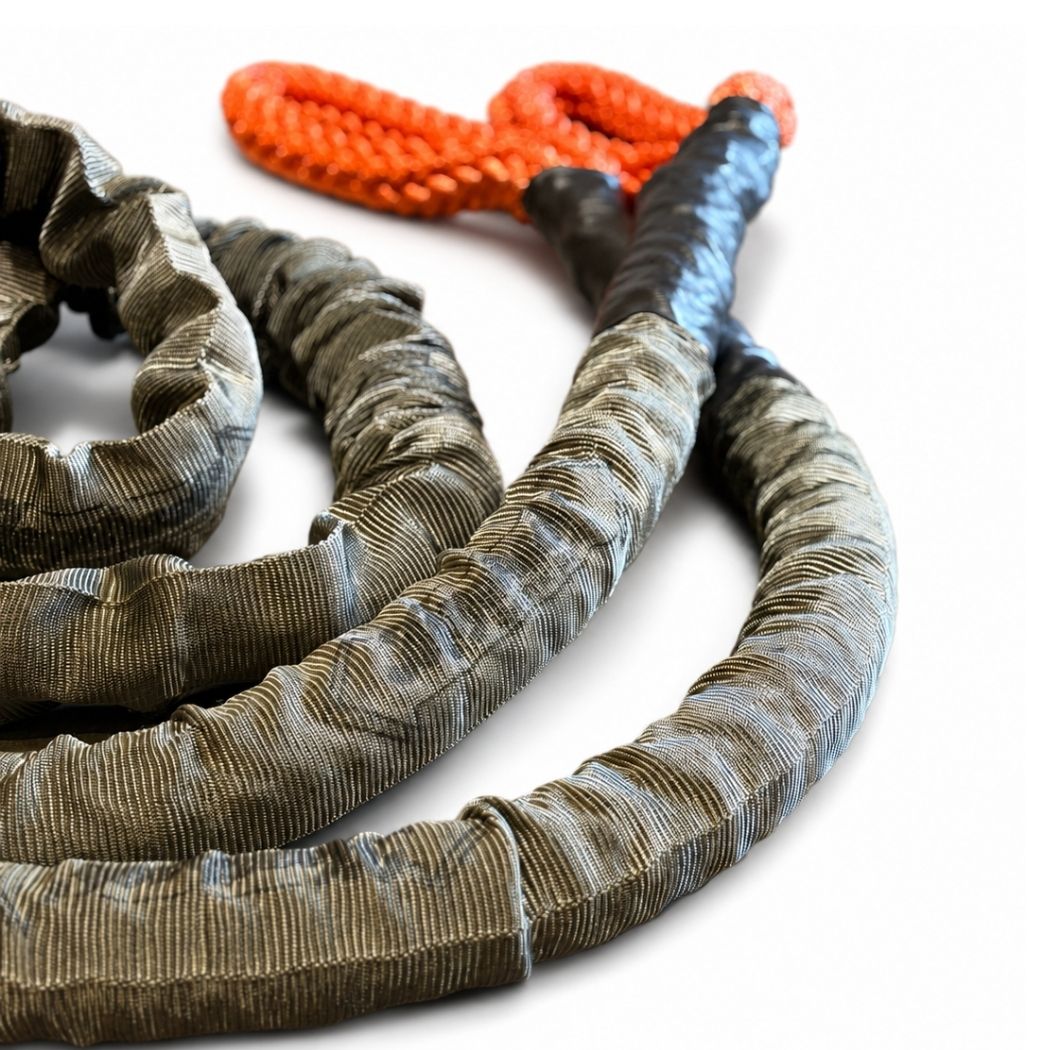
Towing even the heaviest construction equipment safely, without risk to the equipment or workers, is the role of the Megatrack Heavy-Duty.
This kinetic rope uses the inertia of the towing vehicle to gently pull out the bogged-down truck or public works machinery.
This towing sling is available with traction capacities from 40 to 250 tons.
Even large quarry machines, concrete mixers, and crane trucks can be towed with this remarkable sling. Upon request and custom-made, we produce it in our workshops in France.
Choosing your lifting sling
Lifting loads and performing handling operations must be done with the right equipment, under the right conditions. If you have any doubts, here are some things to check to choose your sling well.
Type
Made of wire rope or chain, it will be extremely resistant and specially used in extreme conditions on site: lifting a container, a machine… but they are very heavy, bulky, and more complex to handle.
As rope specialists, we offer textile slings:
light, compact, easy to store, and very suitable for lifting fragile or specially shaped loads.
Working length
Check the length you need. It is forbidden to tie knots or shorten the sling at the risk of altering its resistance.
Adapt the length to your needs, taking into account the angles created. Indeed, excessive lifting angles reduce the capacity of the slings (refer to the load chart).
WLL
WLL = Working Load Limit (or capacity) per leg. This is the maximum mass that the lifted load must not exceed with the sling.
Our round and flat slings comply with the color code for simple and quick identification:
Violet = 1 ton
Green = 2 tons
Yellow = 3 tons
Gray = 4 tons
Red = 5 tons
Safety factor
The safety factor is given by the manufacturer for each type of sling. It is defined by the ratio between the breaking load and the WLL. It differs depending on the nature of the slings.
Example with our textile lifting slings which have a safety factor of 7.
With a WLL of 1T (1,000kg) and a factor of 7, we have: maximum allowable load for use of 1,000kg; breaking load of 7,000 kg.
Warning: this is a unique safety feature, which exists and is imposed to reduce the risk of accidents. To define your slings, you must only consider the WLL indicated on the labels or manufacturer's plates.
Slinging accessories
As important as the sling itself, slinging accessories should not be the weak link in your assembly. Their resistance and composition must also comply with the use you will make of them.
We offer on the site lifting hooks, bow or D-shackles made of high-strength steel.
Ensuring safety
During handling operations, when towing a vehicle or lifting a load with these accessories, safety is paramount.
In addition to the maximum working load to be considered, as mentioned earlier, it is important to consider other factors.
- Do not use the sling directly on sharp edges, such as a cutting sheet metal. In this case, the strap must be protected to prevent it from being cut. This is why we offer PVC or polyurethane corner protectors for straps.
- Carefully calculate the weight of the load. The WLL must be respected, and any breakage must be absolutely avoided, so the load must be correctly weighed.
- Distribute the weight to avoid unbalancing the assembly and risking a fall or breakage of the accessory.
- Do not use wet ropes (already heavier) and work in optimal conditions.
- Do not tie knots with the strap or sling.
- Limit the angle as much as possible when lifting the load, and if it is necessarily significant, prefer another lifting system such as a spreader bar.
Housing
Boating

Agriculture
Work and safety
Sports and leisure

DIY and Garden