

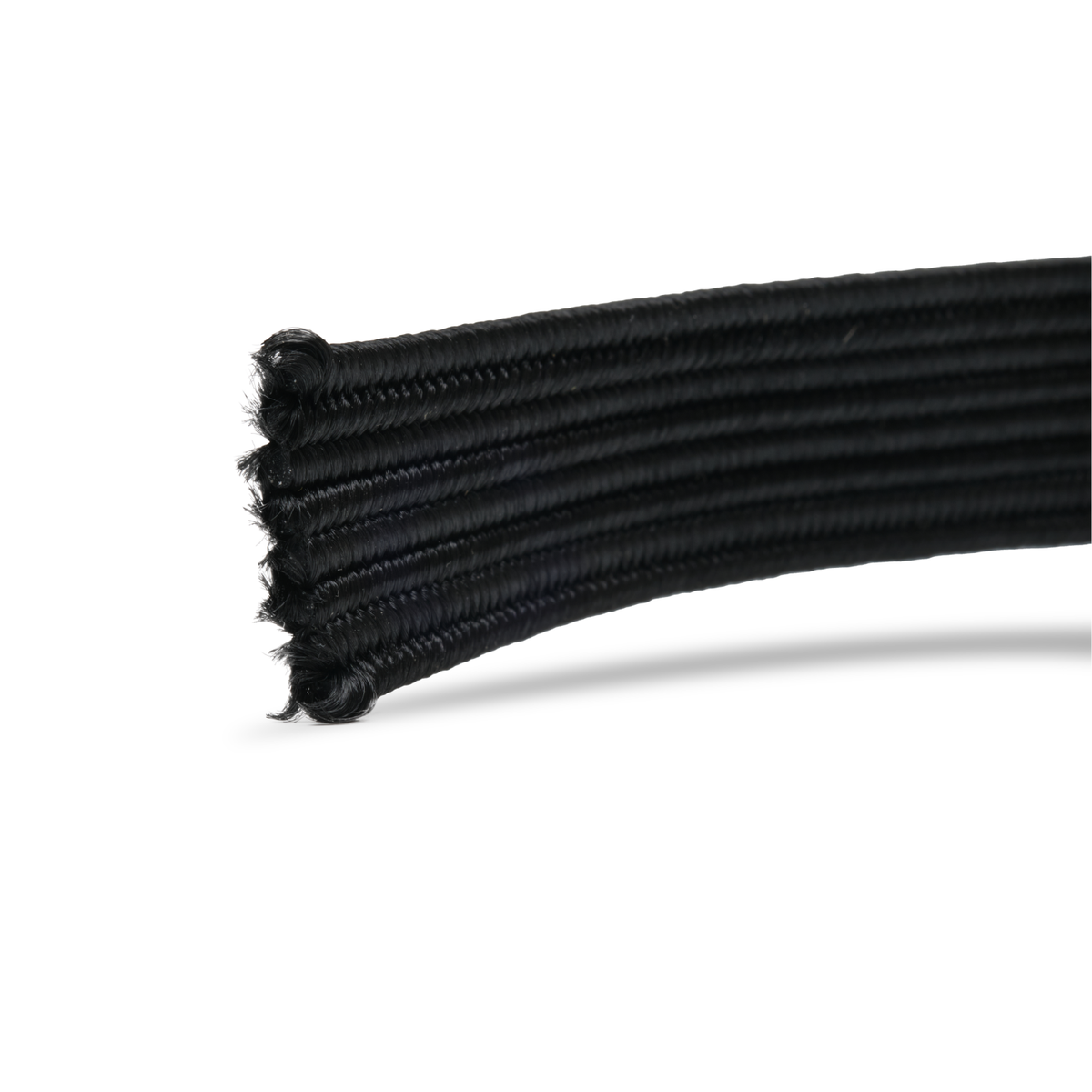
Sandow Multiflex Flat Polypropylene
Free shipping on orders over 250€
for delivery in Metropolitan France
- Sheath material: Polypropylene (PP)
- Core type: Multibrand (Multiflex®)
- Shape: Flat (width x thickness)
- Recommended use: Sewn-in applications, load distribution, webbing and luggage
- UV resistance: 3/5
- Abrasion resistance: 3/5
- Ease of use: 3/5
- Tensile strength: 4/5
- Breaking strength: 4/5
- Available sizes: 11×3 mm, 16×3 mm, 22×3 mm
- Available color: Black
Sandow Multiflex Flat Polypropylene
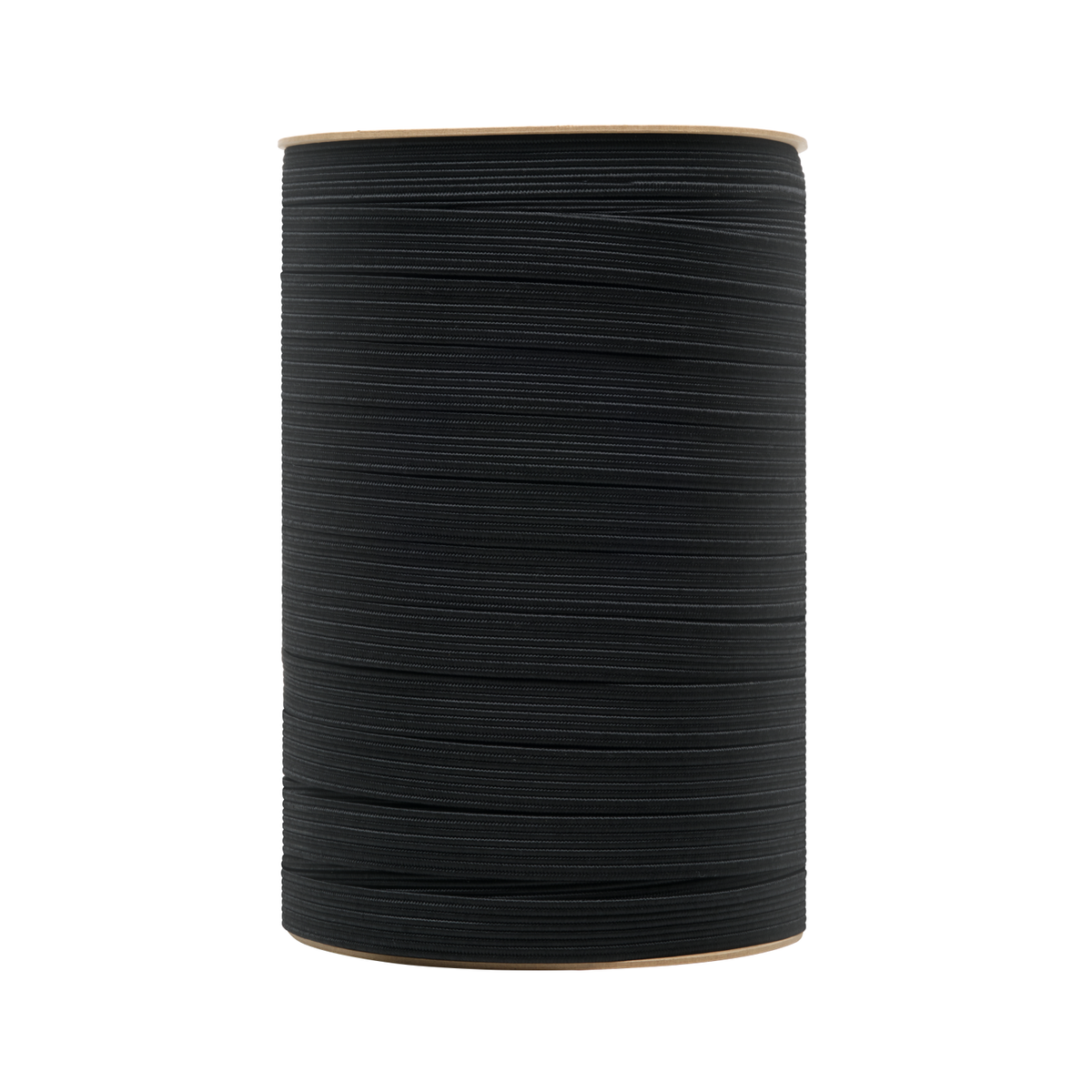
Flat polypropylene elastic cord, designed to distribute tension without concentrating pressure on the support. Can be sewn directly onto fabric, it is ideal for elastic webbing, luggage, and fabric retention systems. Available in three widths.
Multiflex flat elastic cord: tension better distributed
Round elastic cord is not always the best solution, especially when it comes into direct contact with fabric or a sensitive surface. The Multiflex® flat elastic cord provides a simple solution: thanks to its flat cross-section, it distributes tensile force over a wider area, thus limiting pressure points and the risk of marking.
Its construction combines a Multiflex® multi-strand core with a woven polypropylene sheath. It maintains a tensile and return force comparable to that of a round elastic cord of an equivalent cross-section, with all the advantages of its flat shape.
An elastic cord for sewing into webbing and textile equipment
This is where this flat elastic cord really shines: unlike a classic round elastic cord, it can be sewn directly onto a fabric support. There is no longer any need to provide a loop or a specific fastening system to incorporate it into your garment.
It naturally finds its place in the manufacture of elastic webbing, technical belts, luggage equipment, or fabric retention systems.
Available in three sizes (11 × 3, 16 × 3 and 22 × 3 mm) and in black, this polypropylene elastic cord prioritizes ease of integration and force distribution. For applications requiring intensive outdoor exposure, a more technical elastic cord will be preferable.
Frequently Asked Questions
Your most frequently asked questions for safe and effective use
Quelle est la différence entre un sandow plat et un sandow rond ?
Peut-on coudre directement un sandow plat ?
Pour quelles utilisations choisir ce sandow élastique plat ?
Housing

Boating

Agriculture

Work and safety
Sports & Leisure

DIY and Garden