

Which wood to treat with pine tar?
Table of contents
Untreated wood
Untreated wood is the most suitable for treatment with pine tar, and it’s the easiest case.
Here, it's not complicated: all you need to do is simply dust the wood with a cloth, for example, then apply the tar.
Since the wood is untreated, nothing will prevent the oil from penetrating deeply to protect the wood.
Painted or varnished wood
Here, a varnish, glaze, or paint will clog the pores of the wood and create a protective layer. While it prevents moisture, rain, and mold from penetrating, it also prevents the oil from impregnating the wood.
It will therefore be necessary to properly strip your wood: sand it correctly, with a 120 grit for example. Then dust everything with a cloth.
Now your wood is ready to be treated.

Exotic or pressure-treated wood
Exotic and pressure-treated woods are not suitable for pine tar treatment.
On one hand, exotic woods are generally very dense and resistant. They are naturally protected against moisture and many types of damage.
On the other hand, pressure-treated wood is already deeply treated to make it very water-resistant and rot-proof.
These are mainly found in garden furniture (tables, chairs) or for building a wooden deck.
Pine tar will not penetrate the pores of these woods and will simply run off the surface.

Green wood
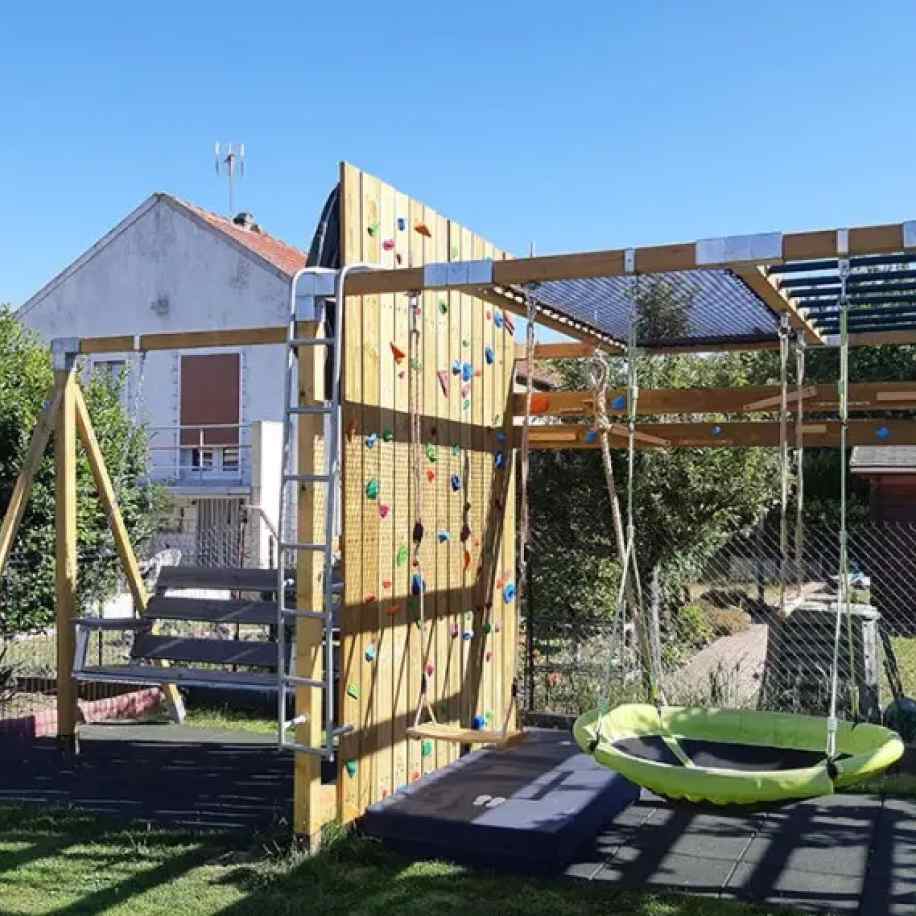
Do you have a wooden swing, a wooden bench, or a wooden table in the garden?
Especially after winter, the wood may be green.
This is due to the presence of mosses, which cling to and penetrate the first millimeters of the wood.
In this case, trying to treat directly with liquid or thick pine tar would not be effective.
First, the wood must be cleaned. For this, you can use a high-pressure cleaner, or a very stiff brush. Avoid metal brushes, which would damage the wood.
Next, sand the wood with coarse-grit paper, such as 40 or 80: this will open the pores of the wood. Clean with a cloth to remove most of the dust. Finally, apply the pine tar.

Wooden stakes and posts
You can use wooden stakes and posts for many reasons: building a fence, constructing a deck, making a pontoon...
Here we will distinguish two parts of the wooden post: the buried or submerged part, and the part left exposed to the air.
Submerged or buried part
To create a thick protective layer around the tip of the stake, it will be coated with thick tar.
Viscous and thick, it forms a dense layer around the wood.
This natural pine tar ideally replaces old treatments made with carbolineum, a toxic and now prohibited substance.
Part exposed to the air
The visible part of the wooden stake or post will be treated with liquid pine tar.
Application
Applying pine tar is then simple and identical in all situations.
It is preferable to apply 2 coats, spaced 24 to 48 hours apart, so that the product penetrates well.
Norwegian tar can be used in many cases, such as for wood protection against moisture or pests. This article (previous link) also provides advice on how to properly dilute and apply the product.