Skip to content
Cart

Your cart is empty

Continue shopping

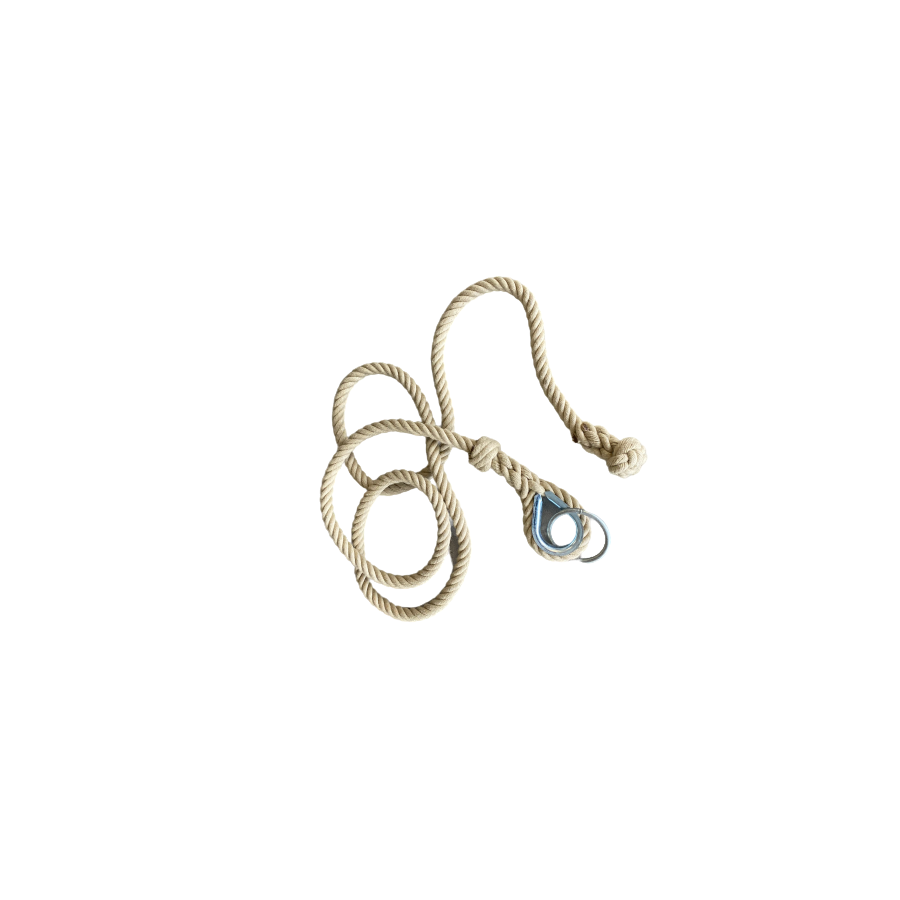
Smooth synthetic hemp climbing rope

Quote on request

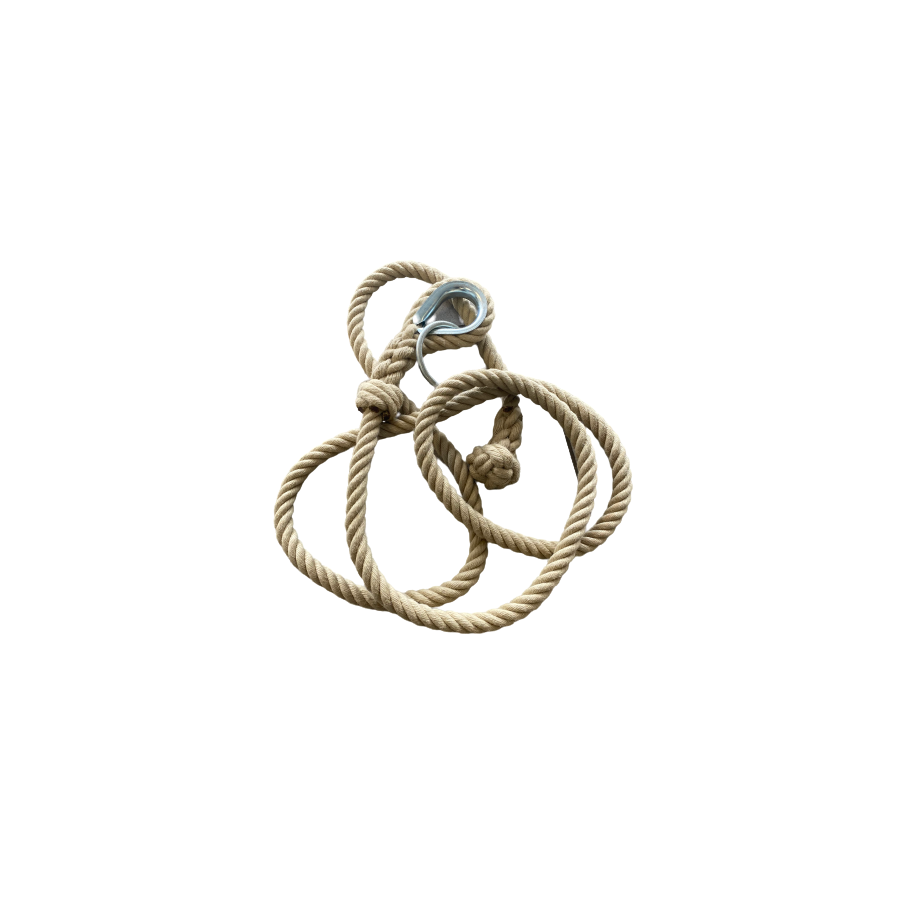
Smooth climbing rope in textured polypropylene, imitating hemp, handcrafted in our workshops in France. Knot-free, it relies solely on arm strength and leg lock for climbing: the benchmark exercise for firefighters, military personnel, and physical training facilities. Rot-proof and UV-treated, it can be installed both in gymnasiums and permanently outdoors. Configure your rope: diameter, length, and finish of your choice.


Diameter: 28 mm
Length: 2 m
Finish: Heart pod
In stockShipping within 48 to 72 hours

Technical Specifications
Size Guide

Size Guide

Three criteria to define when configuring your rope: length, diameter, and attachment finish.

Step 1 — Choose the length

The rope attaches above the climbing point. Measure the height of your attachment point, then subtract approximately 30 cm (12 inches) to get the appropriate rope length.

Rope Length Attachment Height
2.00 m (6 ft 7 in) 2.30 m (7 ft 7 in) and above
2.20 m (7 ft 3 in) 2.50 m (8 ft 2 in) and above
2.70 m (8 ft 10 in) 3.00 m (9 ft 10 in) and above
3.00 m (9 ft 10 in) 3.30 m (10 ft 10 in) and above
3.20 m (10 ft 6 in) 3.50 m (11 ft 6 in) and above
3.70 m (12 ft 2 in) 4.00 m (13 ft 1 in) and above
4.00 m (13 ft 1 in) 4.30 m (14 ft 1 in) and above
5.00 m (16 ft 5 in) 5.30 m (17 ft 5 in) and above
6.00 m (19 ft 8 in) 6.30 m (20 ft 8 in) and above
7.00 m (23 ft) 7.30 m (23 ft 11 in) and above
8.00 m (26 ft 3 in) 8.30 m (27 ft 3 in) and above
9.00 m (29 ft 6 in) 9.30 m (30 ft 6 in) and above
10.00 m (32 ft 10 in) 10.30 m (33 ft 10 in) and above
11.00 m (36 ft 1 in) 11.30 m (37 ft 1 in) and above
12.00 m (39 ft 4 in) 12.30 m (40 ft 4 in) and above

The stated length corresponds to the finished rope, including thimble and weighting knot. The bottom of the rope should remain approximately 30 to 40 cm (12 to 16 inches) from the ground.

Step 2 — Choose the diameter

On a smooth rope, the diameter directly affects the difficulty of the exercise. A moderate diameter closes in the hand and facilitates climbing; a large diameter requires an open-hand grip and becomes a true grip strength exercise.

Diameter Audience and Use Difficulty
28 mm (1.1 in) — best-seller Gyms, clubs, cross-training, climbing initiation Full hand grip, accessible climb
36 mm (1.4 in) Gymnasiums, fire stations, obstacle courses, intensive collective use More demanding grip, forearm workout
40 mm (1.6 in) Advanced physical preparation, grip strength, grip training Maximum difficulty, reserved for experienced practitioners

For a facility accommodating all levels, 28 mm remains the best compromise. 36 mm is the standard for institutional installations.

Step 3 — Choose the finish

The top finish determines the attachment method, while the bottom finish determines the appearance and weighting of the free end.

Finish Description Recommended for
Stainless steel thimble Splice on thimble, protects the rope from the anchor point Standard, included by default
Ring + marine stainless steel thimble 316 stainless steel ring, maximum corrosion resistance Permanent outdoor use, seaside
Simple spliced loop Hand-made loop, no metal Passing around a beam or bar
Stainless steel bow shackle Quick release, adjustable height Rope regularly detached
Large rope knot at the bottom Weights the end and prolongs its lifespan Standard, included by default
Whipped bottom end Flat finish, no weighting Ropes hanging very close to the ground

Unsure about your configuration?

Our ropes are custom-made: contact us with the height of your attachment point, the type of structure, and the level of the users, and we will recommend the appropriate model.

Care advice

No special maintenance required. Rinsing with clear water is sufficient to remove dust and dirt, and the rope can dry in place. Do not use solvents or high-pressure cleaners. Visually inspect the condition of the strands, thimble, and anchor point before each season of use, and more frequently in intensive collective use.


Corde à grimper lisse 10m chanvre synthétique
Smooth synthetic hemp climbing rope28 mm / 2 m / Heart podQuote on request
Product details

Rope climbing exercise

Rope climbing is an intense physical exercise, popularized by firefighters, police officers, and military personnel. It engages the entire upper body — hands, forearms, back, shoulder girdle — but also the legs, which grip and block the rope to ascend. Without knots to rest the feet, the difficulty increases considerably compared to a knotted rope: climbing requires real physical fitness, especially for speed.

It is the standard equipment for physical training rooms, obstacle courses, cross-training boxes, gyms, and fire stations.

A rope that stays outdoors

Textured polypropylene replicates the look and feel of natural hemp, without its drawbacks. It doesn't absorb water or moisture, doesn't mold, and is UV resistant: your rope can stay in place all year round, rain or shine, without hardening or deteriorating. It can be installed indoors or outdoors, on a beam, framework, portico, or metal structure.

French artisanal manufacturing

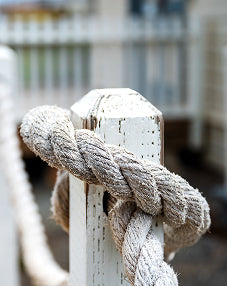
Each rope is handmade in our workshops, from French-sourced rope. The upper end is equipped with a stainless steel thimble, very resistant and rust-free, which facilitates attachment and protects the rope from the anchor point. The lower end is finished with a large rope knot that weights the end and prolongs its longevity. Splices are made manually, without adding plastic parts.

Safety

The smooth rope exposes climbers to a greater risk of falling than a knotted rope: descents are made with controlled slides, and fatigue sets in quickly. Clear the climbing area and install shock-absorbing landing equipment under the rope, such as a large gymnastics mat. For less experienced climbers, provide a harness and a rappel rope. Regularly check the condition of the rope, thimble, and anchor point. Rope delivered with its precautions for use.

Fabrication artisanale française

Chaque corde est confectionnée à la main dans nos ateliers, à partir de corde d'origine française. L'extrémité haute est équipée d'une cosse-cœur en acier inoxydable, très résistante et sans risque de rouille, qui facilite la fixation et protège la corde du point d'ancrage. L'extrémité basse se termine par un gros nœud de cordage qui leste le bout et prolonge sa longévité. Les épissures sont réalisées manuellement, sans ajout de pièce plastique.

Sécurité

La corde lisse expose davantage à la chute qu'une corde à nœuds : la descente se fait en glissé contrôlé et la fatigue arrive vite. Dégagez la zone de grimpe et installez une réception amortissante sous la corde, de type gros tapis de gymnastique. Pour les pratiquants les moins aguerris, prévoyez un baudrier et une corde de rappel. Vérifiez régulièrement l'état de la corde, de la cosse-cœur et du point d'ancrage. Corde livrée avec ses précautions d'emploi.