

How to tell if hay is still good for horses?
Table of contents
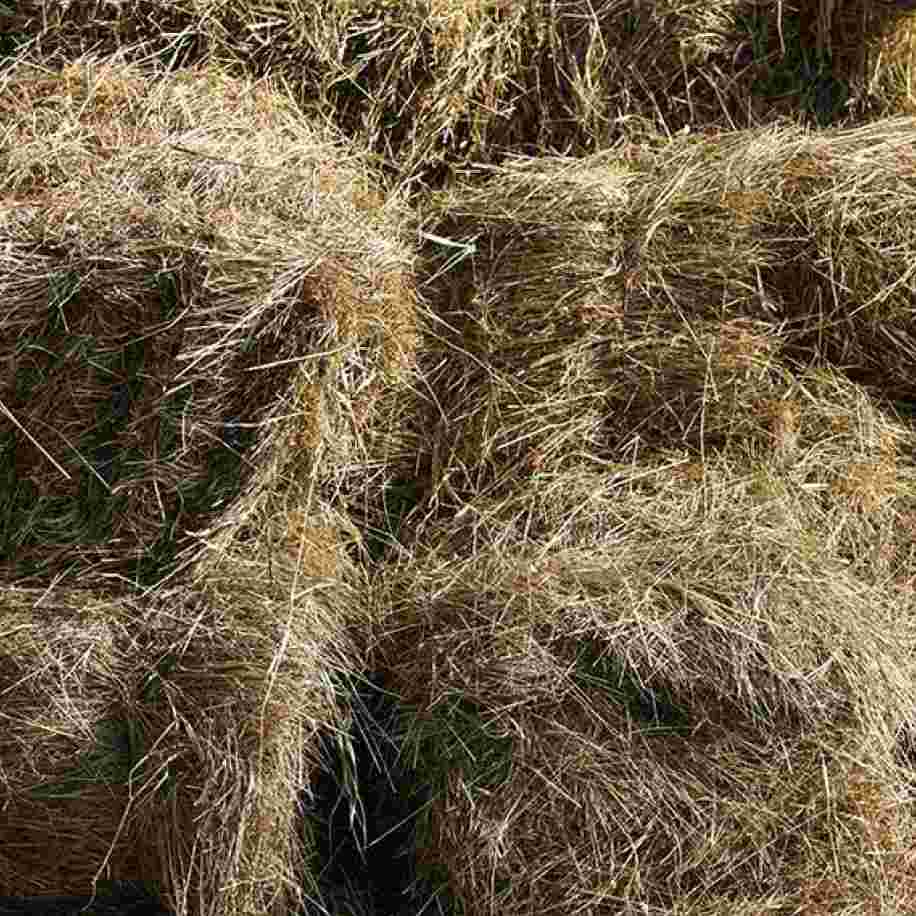
As long as hay isn't dusty or moldy, and it's not several years old, it's still good for your horses. Most importantly, the hay must be dry and clean.
Over time, however, it loses its nutritional qualities.
Recognizing good hay for your horses
Hay is the staple food for your horses in winter when grass no longer grows in the pastures. It must be of good quality, both in taste so that the horse wants to eat it, and nutritionally to provide a healthy and rich diet.
Good forage guarantees healthy animals with a well-functioning digestive system.
For hay to be good and of good quality, it must meet several criteria:
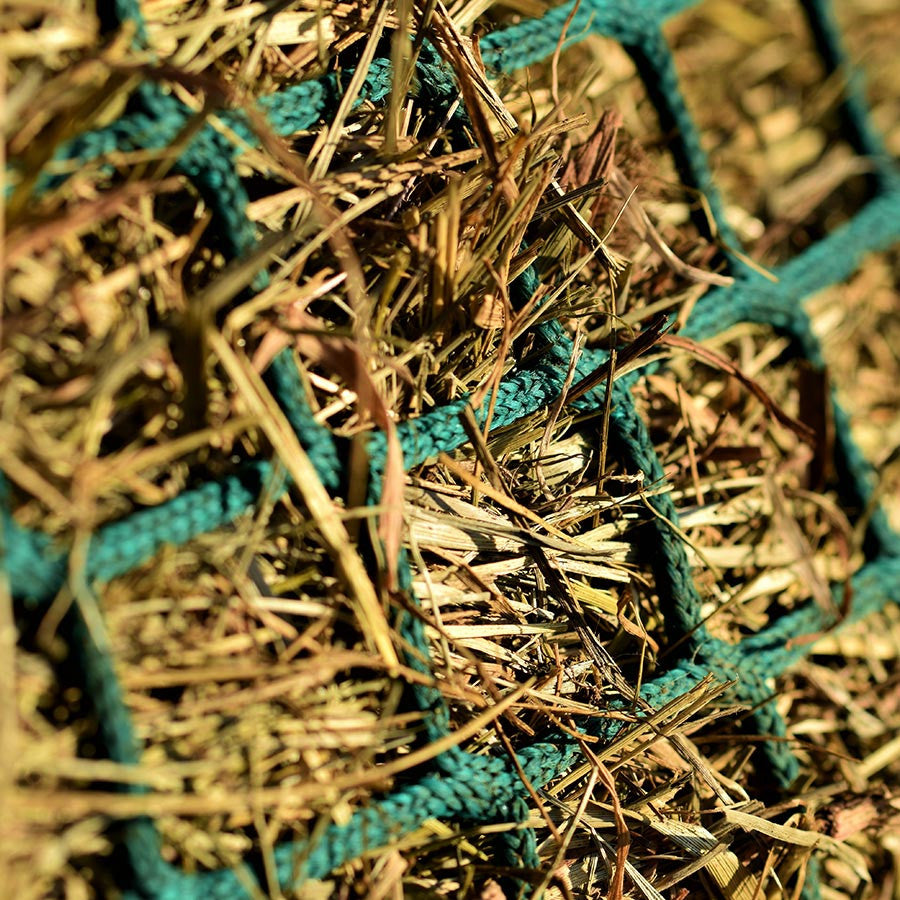
- Its color varies between light green and dark green;
- It shows no signs of mold;
- It is not damp;
- It does not smell bad (neither musty nor fermented…);
- It is not dusty or dirty;
- It is composed of at least 85% dry matter
By checking all these points, you can be sure you are giving quality forage to your horses.
It quickly becomes clear that hay poorly preserved, poorly stored, or left on the ground in the pasture in the rain will not be suitable…
How long can hay be stored?
Under good conditions, you can perfectly store your hay for 2 or 3 years and give it to your horse.
It is best to feed it within one year of harvest (or purchase) or within 2 years.
It is true, however, that the longer time passes, the more the forage will lose its nutritional qualities.
But if it remains clean and dry, palatability should not be affected, and your horse will eat it without problems and without waste.
After this period, if you still have old hay stored somewhere, it will serve more as bedding than anything else.
Avoiding hay waste
If your hay smells bad, is damp, dusty, or shows signs of mold, horses will no longer want to eat it.
On the other hand, your hay may be of good quality and still not be good enough for your horse: the animal will lose its appetite and will not eat the hay willingly, or even it will waste a large quantity.
You will then spend much more money to replenish the forage and feed your horses all winter.
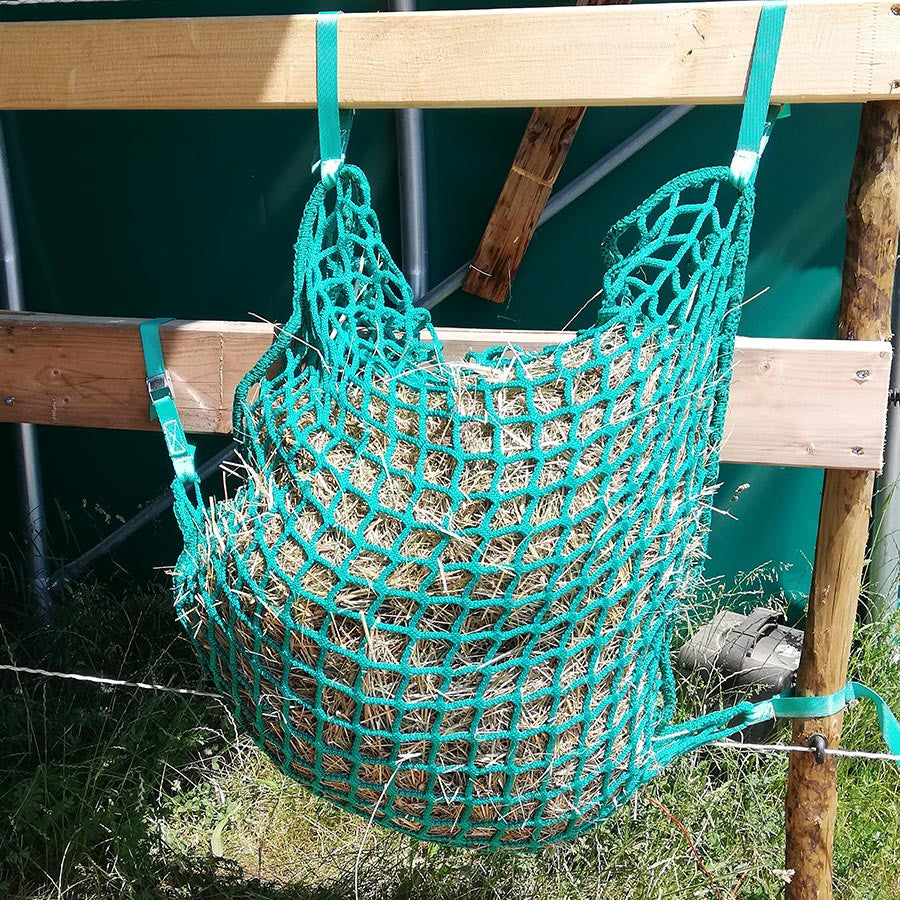
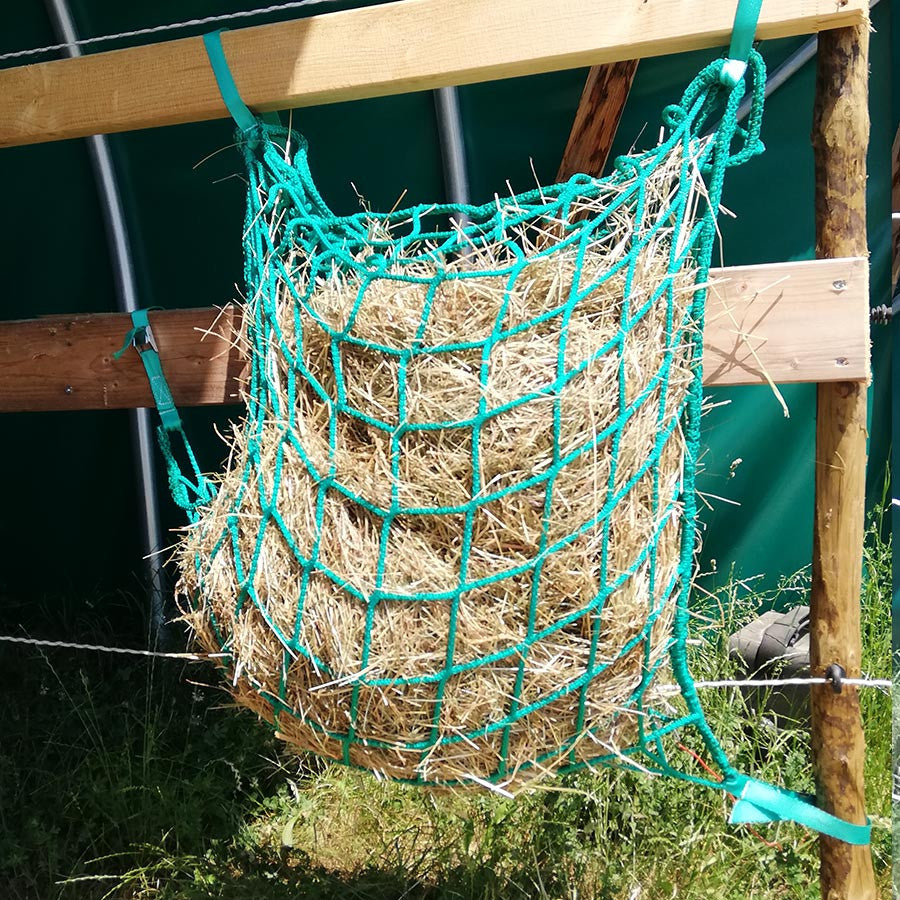
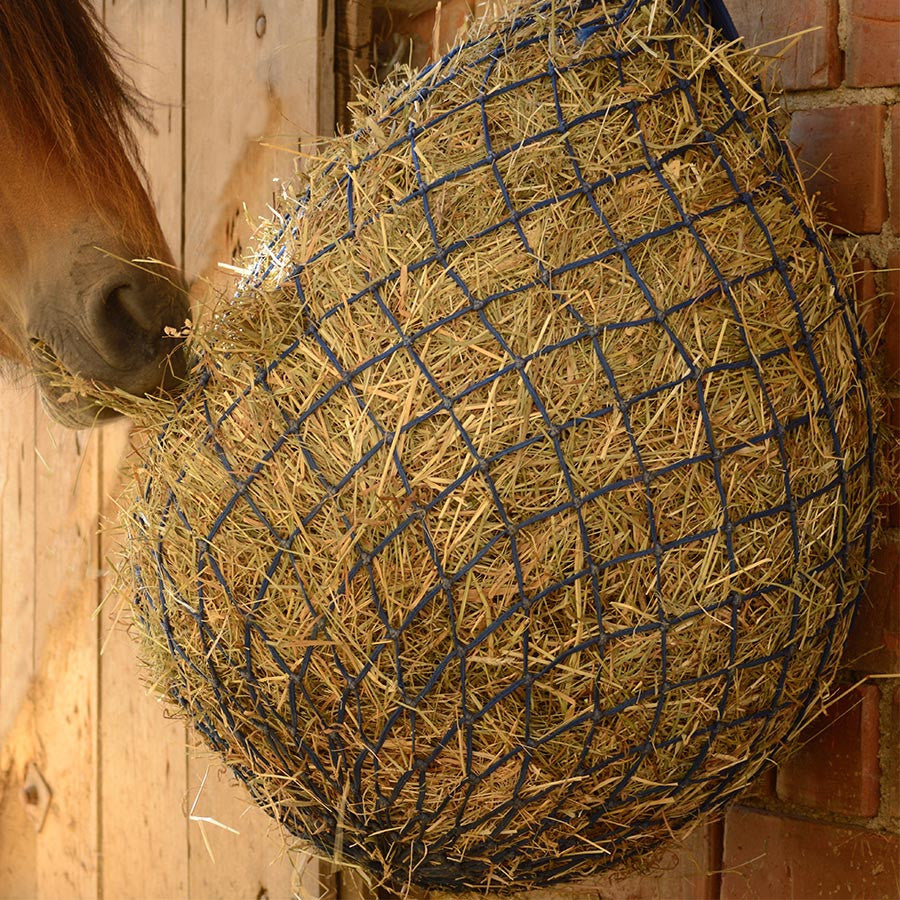
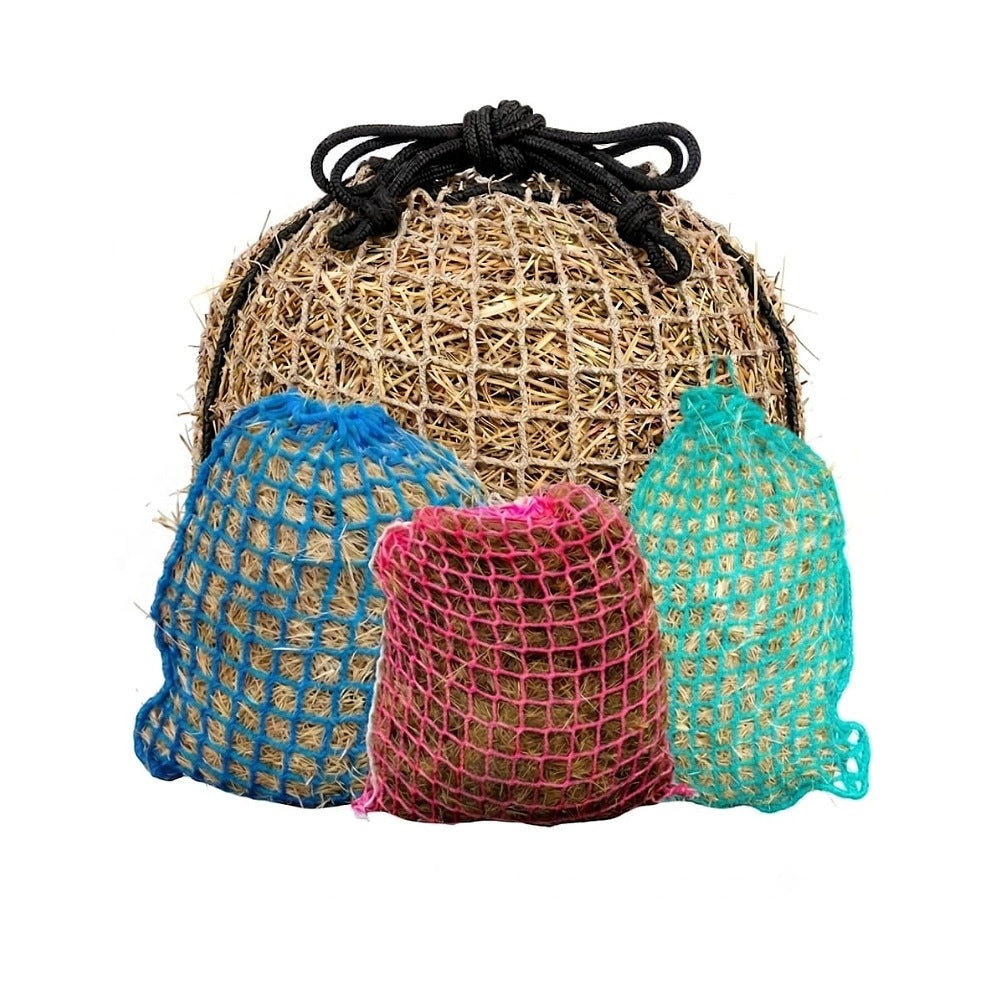
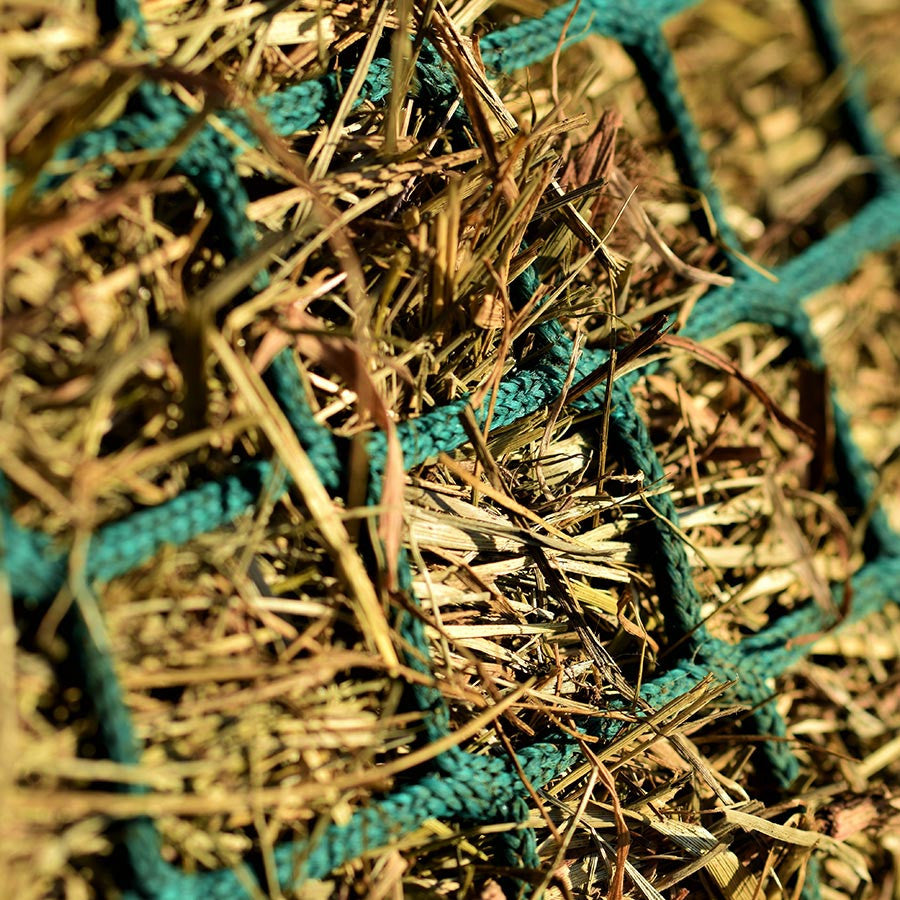
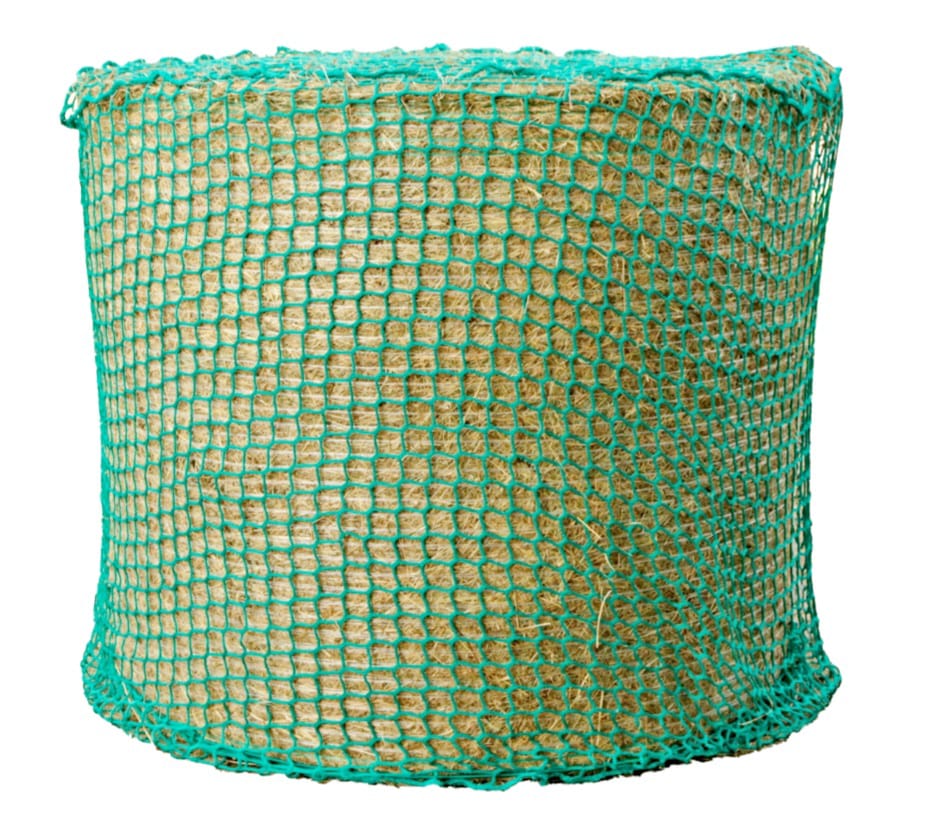
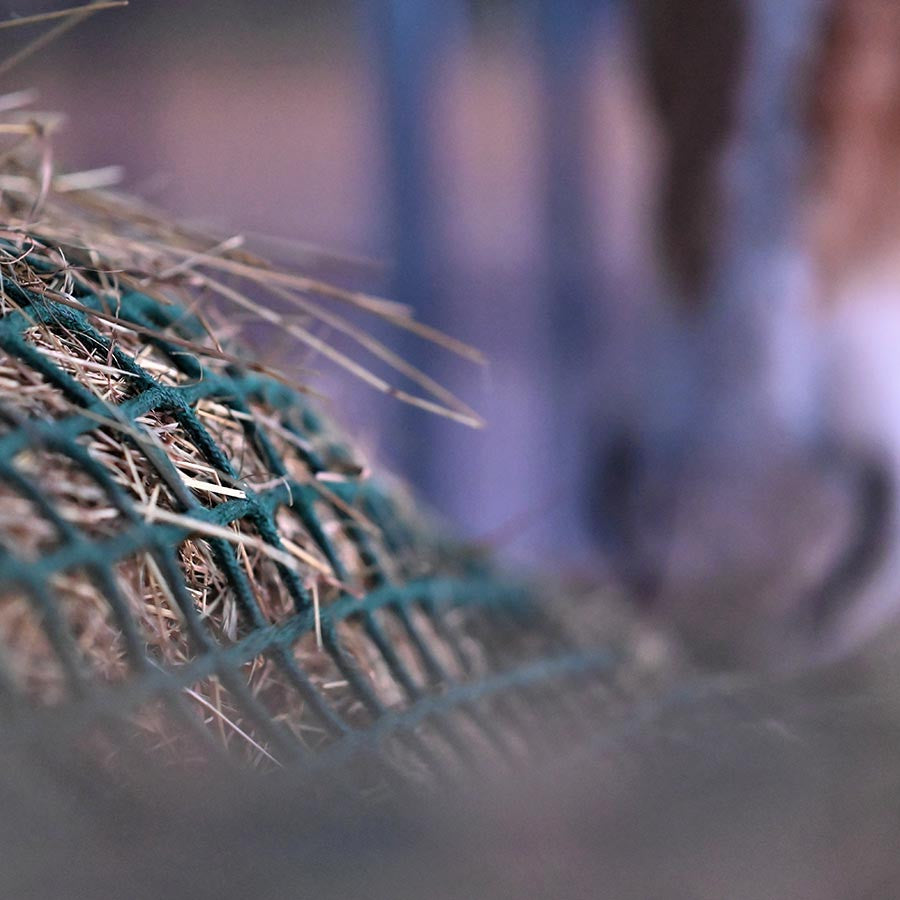
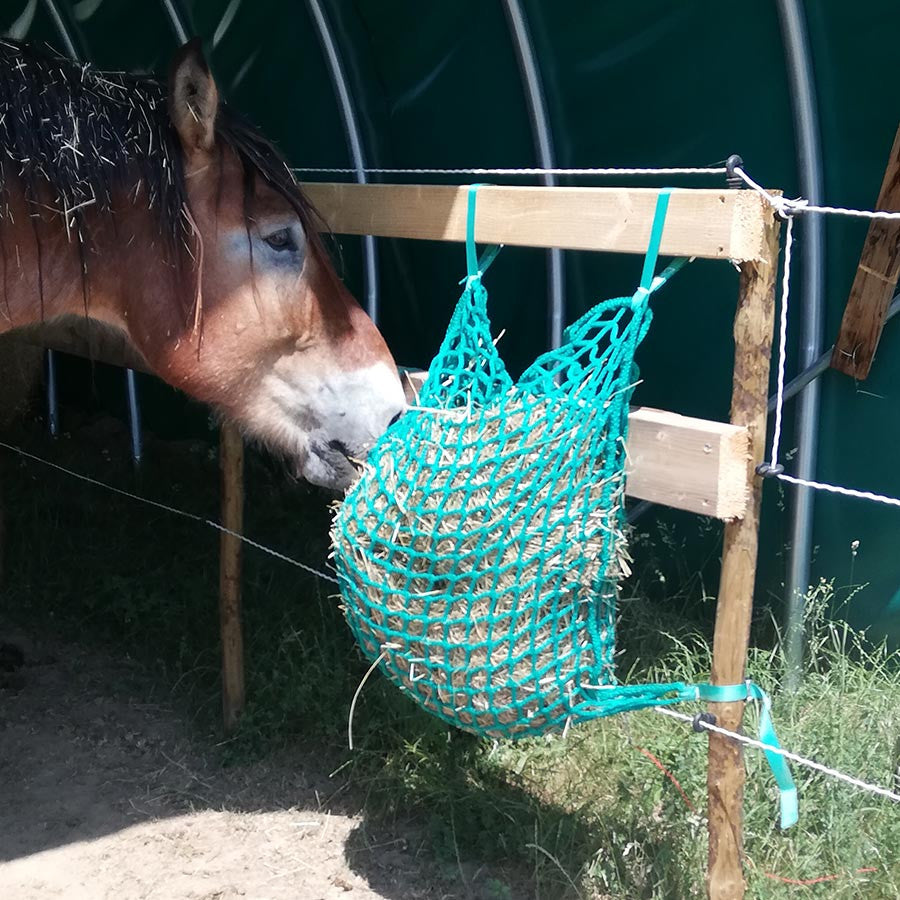
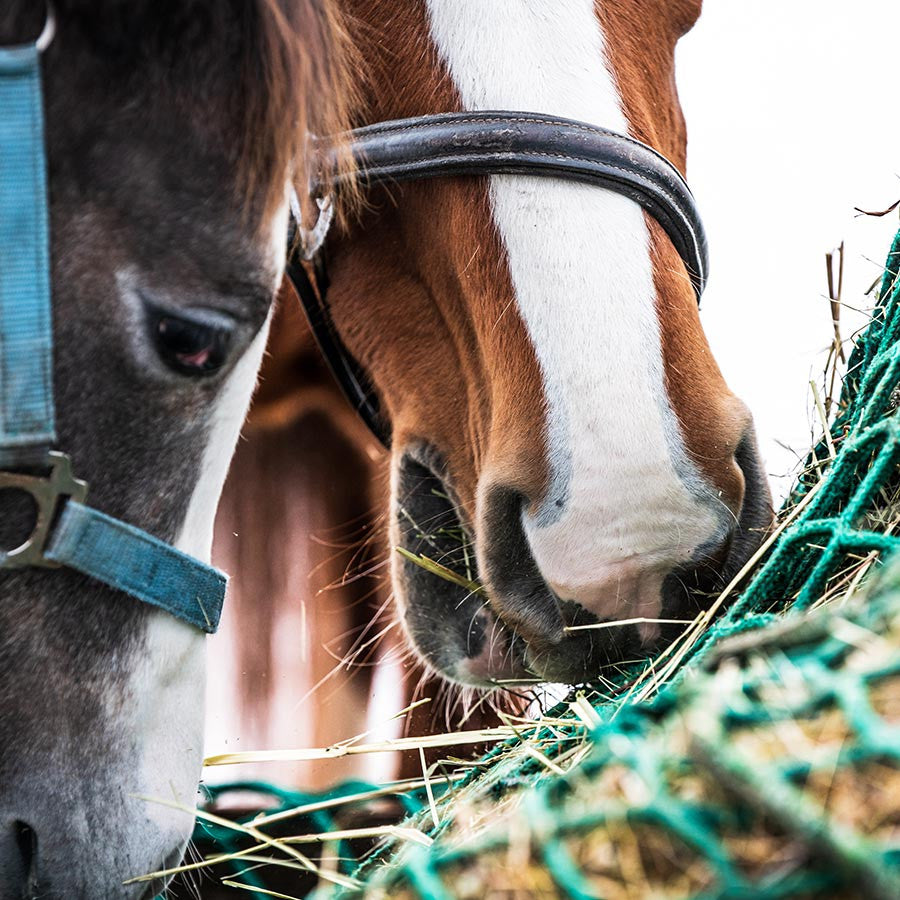
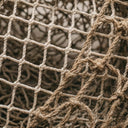
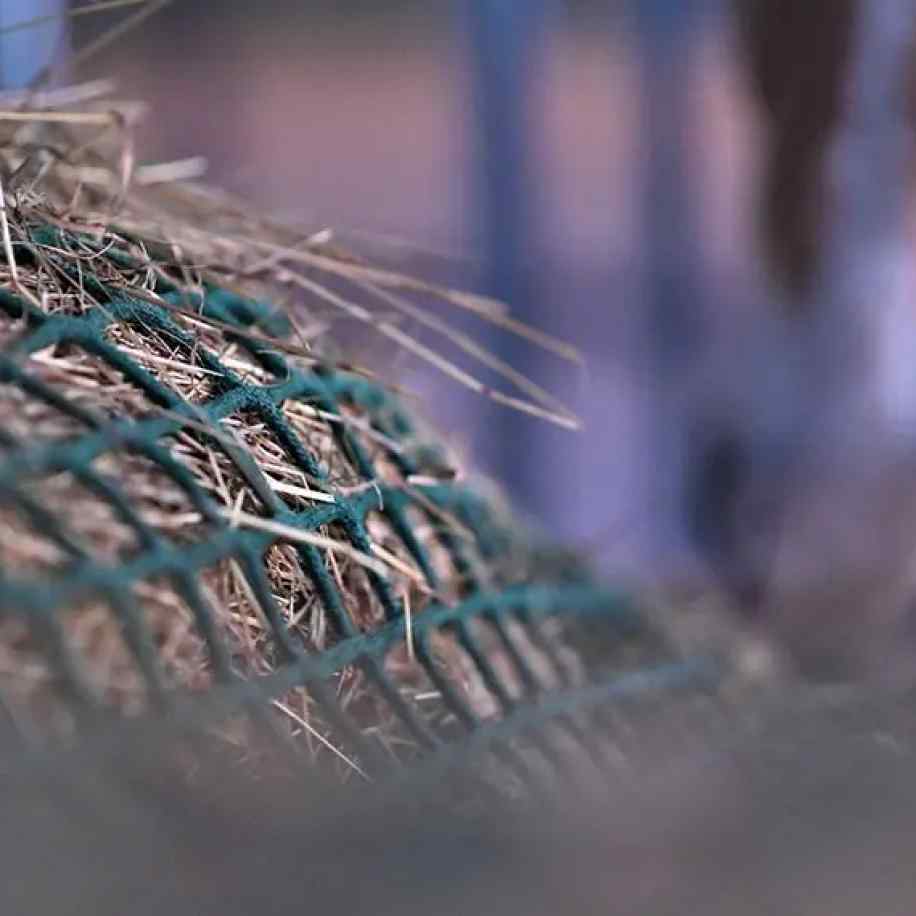
To avoid forage waste, a hay net is a practical and easy-to-install piece of equipment, both in the pasture and in the stall. Thanks to the very tight mesh of the hay net, the dried grass will not quickly spread on the ground where it would get damp and be trampled. The hay remains well baled or in a pile, and it is distributed little by little.
How to properly store hay?
Hay's worst enemy is humidity!
Both during the wilting and drying phase and during its storage in a barn or shed.
The first thing to do to preserve your hay for a long time is to protect it from bad weather and keep it from contact with ground moisture.
A simple shelter with a tin roof over the forage will not be enough; prefer a shed or barn well protected on 3 sides as well.
To avoid mold and bacteria formation, hay degradation, or worse, the risk of fire, it is absolutely necessary to store very dry hay.
Indeed, below 85% dry matter, the hay will be too damp. A chemical reaction will follow: bacteria and molds develop, degrade the hay, and it heats up.
Like compost, if you will, but much more intensely!
Hay stored in a barn should not exceed 40 or 45°C, or 50°C maximum.
If it is too damp, it heats up and can reach 80°C, even igniting and causing a fire.
Such events are unfortunately reported every year in the press and affect many farms. So be careful with your hay storage!
Cited in this article