
How to avoid hay wastage for horses?
Table of contents
To prevent horses from wasting hay, it's important to avoid providing excessive amounts, protect the forage from bad weather, and prevent hay from lying on the ground.
To achieve this, you have several techniques and solutions at your disposal.
Reasons for waste
In winter, as temperatures drop, horses need additional food intake to stay healthy. This applies to both stabled horses and hardier horses that spend the winter in the pasture.
However, horses will not eat soiled, moldy, or poor-quality hay.
Specifically, here are the situations that increase waste:
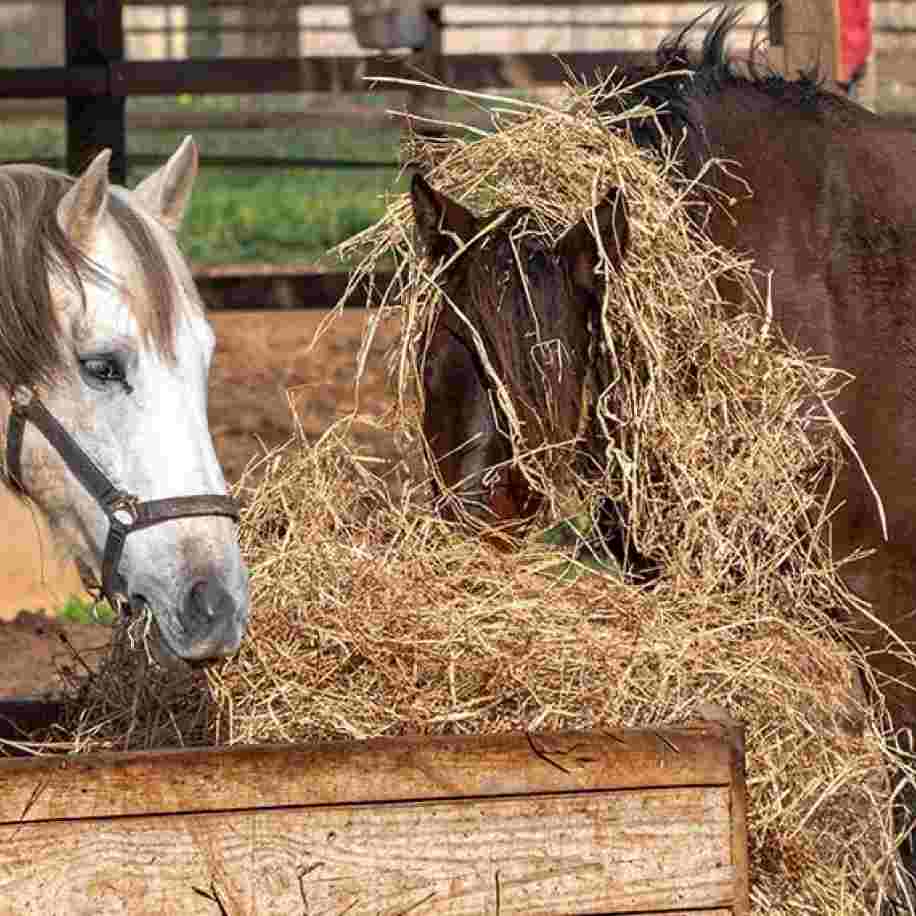
- Forage given in too large quantities, which easily falls to the ground;
- Soiled hay (mud, droppings, dirt, etc.);
- Damp, wet hay, or hay that has started to mold;
The worst-case scenario?
A large hay bale placed on the ground in a pasture. Significant waste guaranteed!
Therefore, we aim to limit these situations to minimize hay waste as much as possible.
Sheltering hay from the rain
The first thing to do to limit hay waste is obviously to shelter it from the rain.
In the stable, in the stall, the forage served to the animal is protected from bad weather. The question therefore mainly arises in the pasture.
As we mentioned earlier, if your hay bale is simply placed in the pasture, it will quickly become soaked, and the horses will waste a large quantity of forage.
It is therefore advisable to install a covered feeder with a roof (most often made of sheet metal). There are also plastic ones.
A fixed pasture feeder with a large roof is expensive and is sometimes perceived as too much of a constraint by horse owners. However, it is a stable and durable installation that lasts for many years.
Given the price of a hay bale... Calculate the amount wasted or, conversely, saved each winter, over several years. You will quickly see that the investment is worthwhile.
If you are very handy, you can also design one yourself!
Elevating the hay
Whether in the pasture, in the stall, or in a yard, avoid leaving hay directly on the ground if possible.
Firstly, because hay on the ground will be more easily exposed to moisture and will mold more quickly. This can be due to rain and standing water, but also to runoff, morning dew, or even capillary action.
We don't always realize how easily water can seep in or rise, and moisten the forage to the point of causing it to rot.
Secondly, placing hay at a height will prevent the horse from trampling and scattering it everywhere.
Hay placed directly on the ground quickly gets soiled, mixed with mud, droppings, etc., and is neglected by horses.
Several techniques are available to elevate hay:
- Standing hay rack
- Wall-mounted hay feeder
- Raised manger
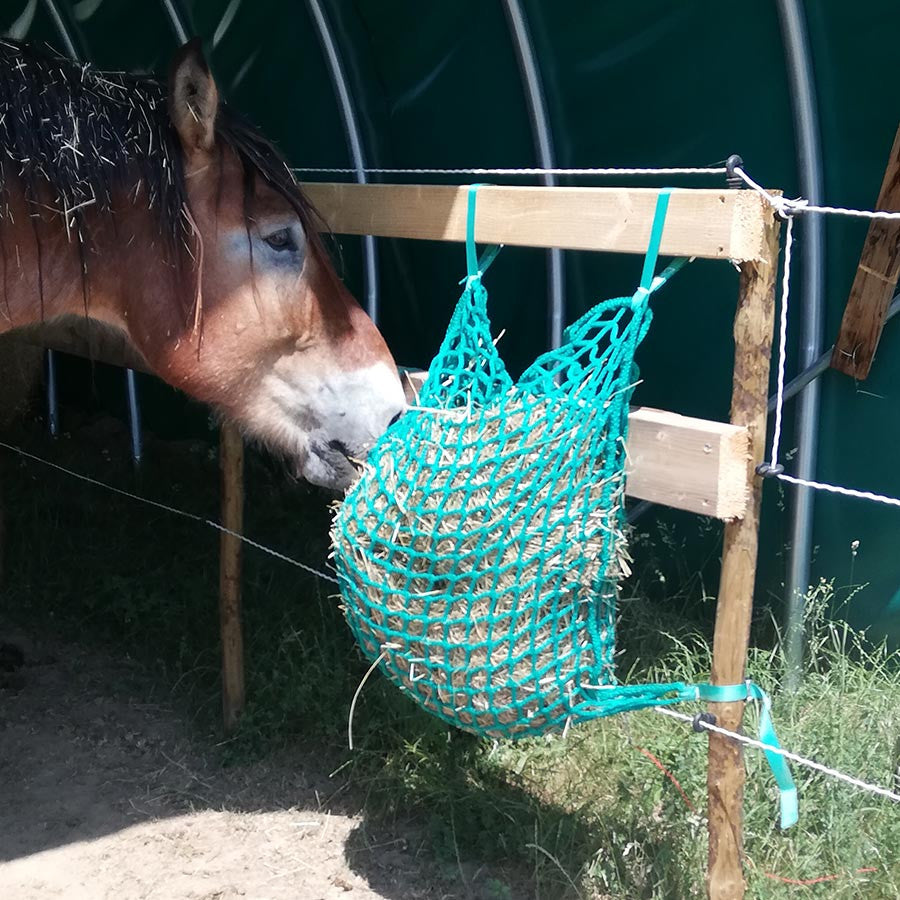
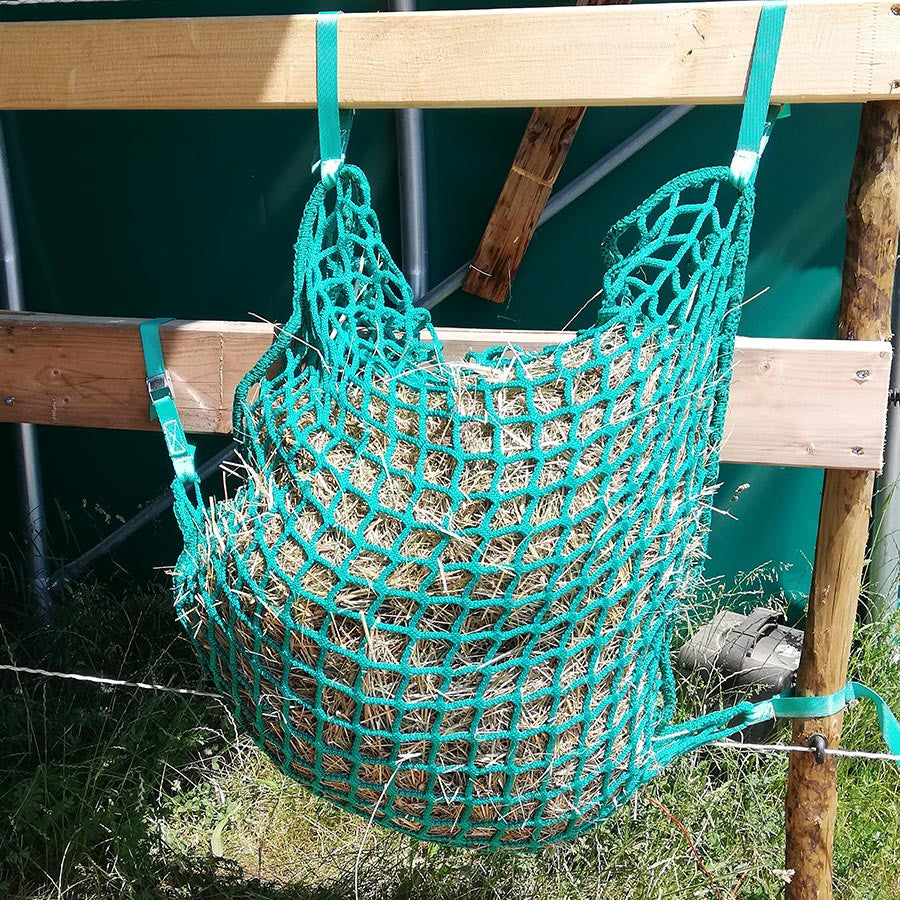
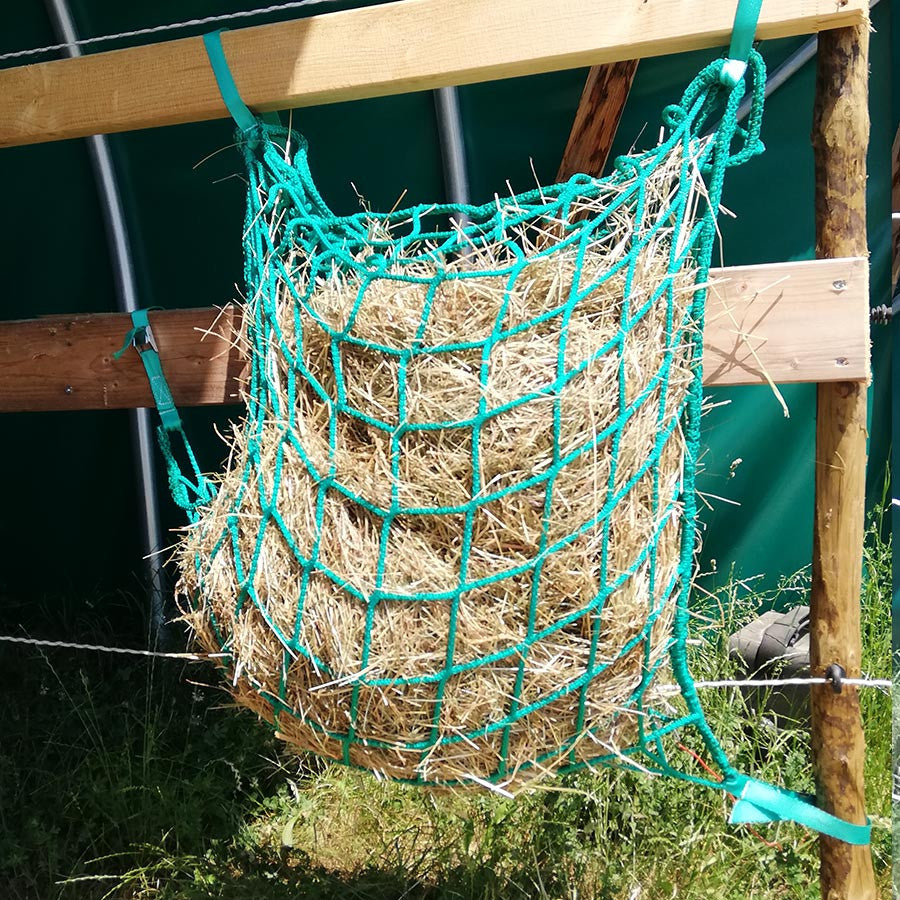
- Suspended hay net
Rationing hay
To prevent waste and weight gain in horses, some owners opt for rationing. The daily hay ration is then distributed in 3 or 4 portions, spread throughout the day.
Mechanically, if less forage is served to the horse at once, there is a greater chance that it will eat the entire portion without wasting any.
You can combine this with the use of a hay rack or manger. Even homemade hay racks can be suitable! For example, you can use an old wooden crate or assemble pallets.
However, rationing is not a recommended practice.
Long periods of fasting notably cause an acidification of the stomach and the entire digestive tract of the equids.
Between feeding periods, the horse may also experience boredom.
Using a slow feeder
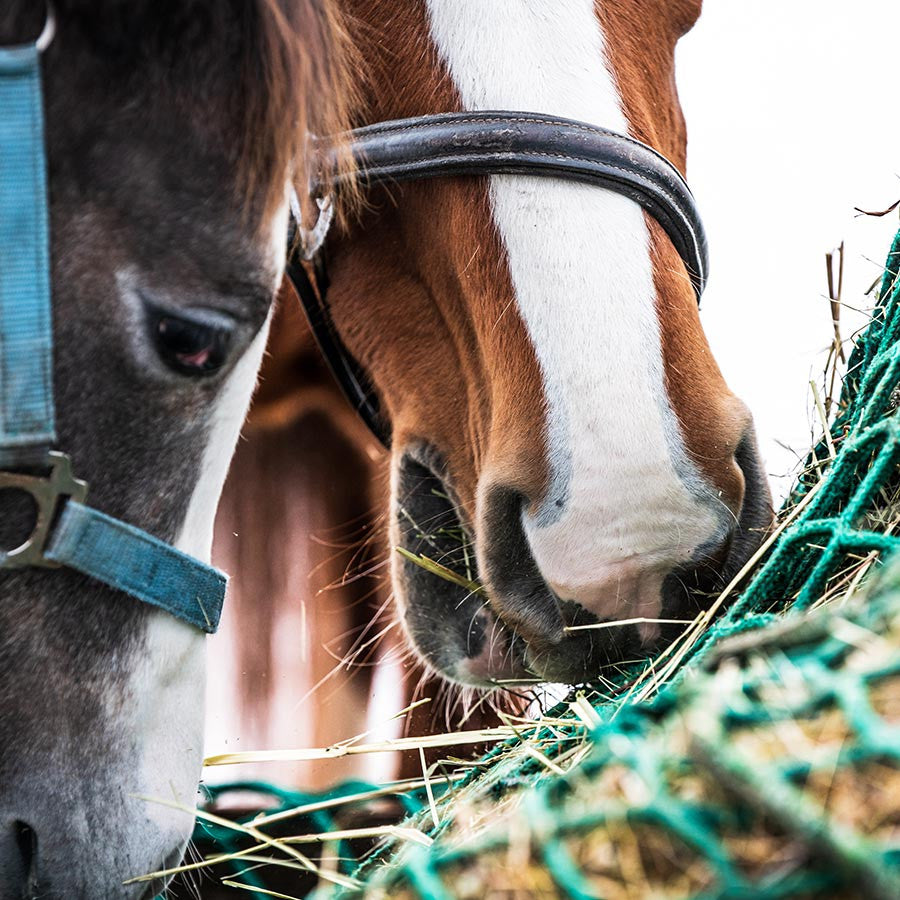
A slow feeder is a device that enables slow feeding for horses. Hay, straw, or grass is placed in a device that restricts access to the food: the horse cannot gorge itself.
Serious studies are beginning to emerge on the benefits of slow feeding for horses, especially if they are overweight or waste a lot.
There are several types, shapes, sizes, and materials available on the market, for example:
- A kind of perforated plastic or metal barrel
- Wooden box with openings
- Large plastic ball with holes
- Box with metal bars
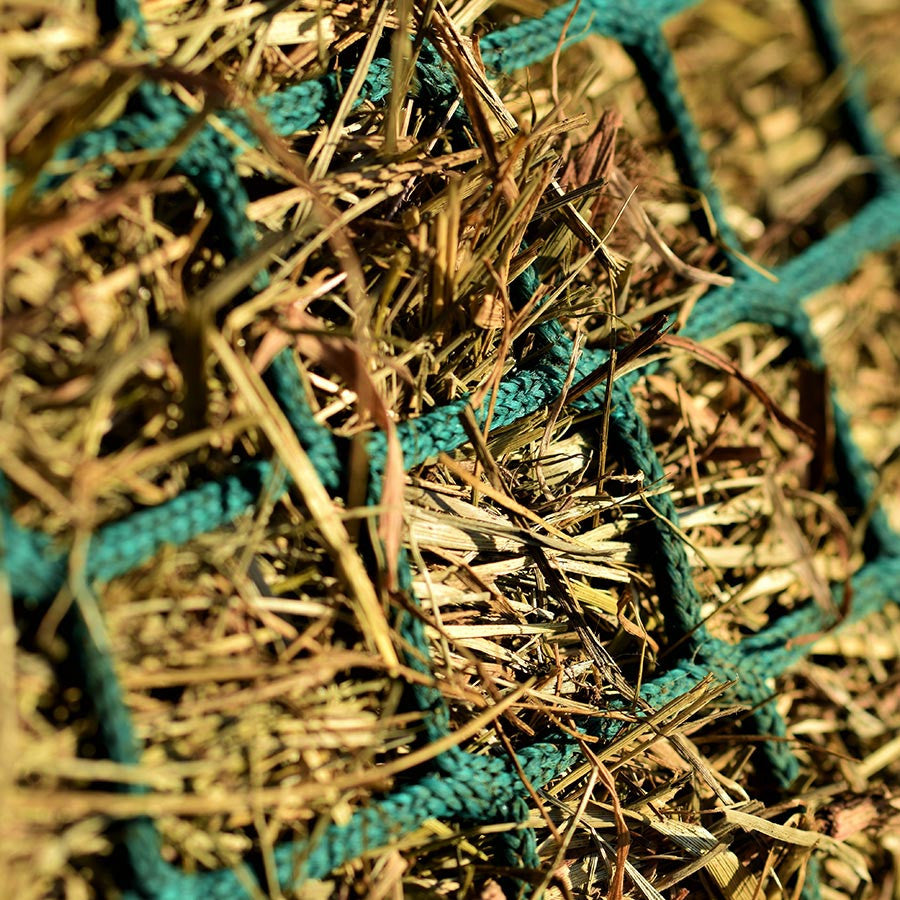
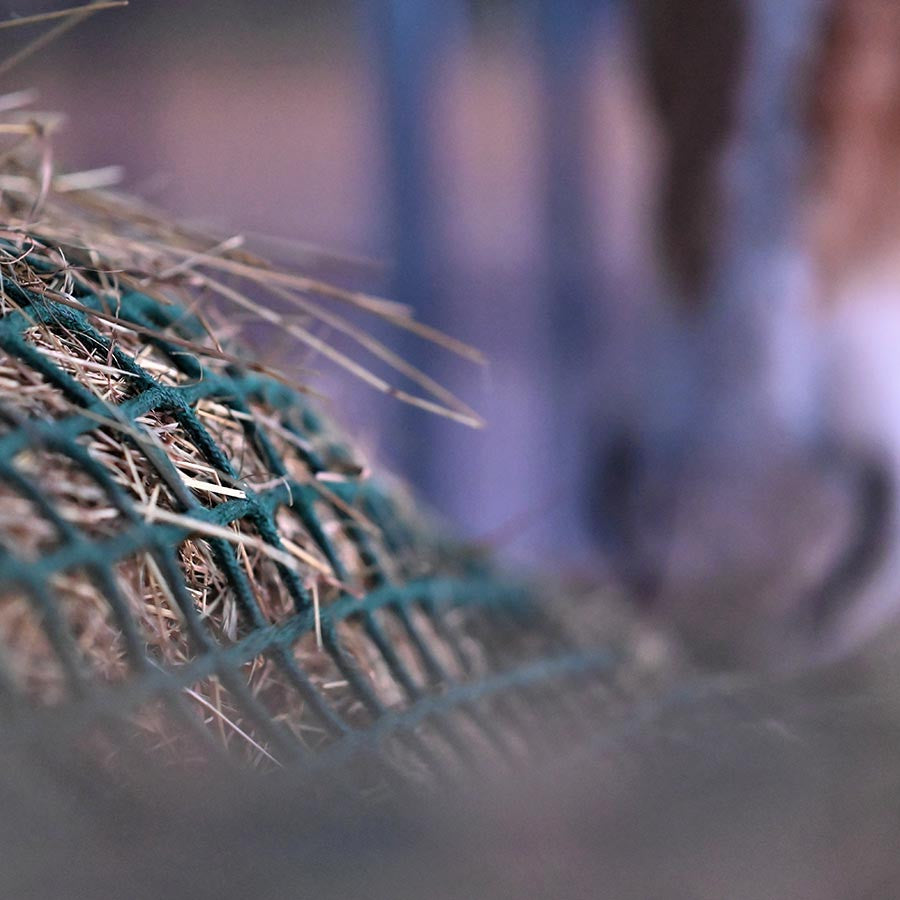
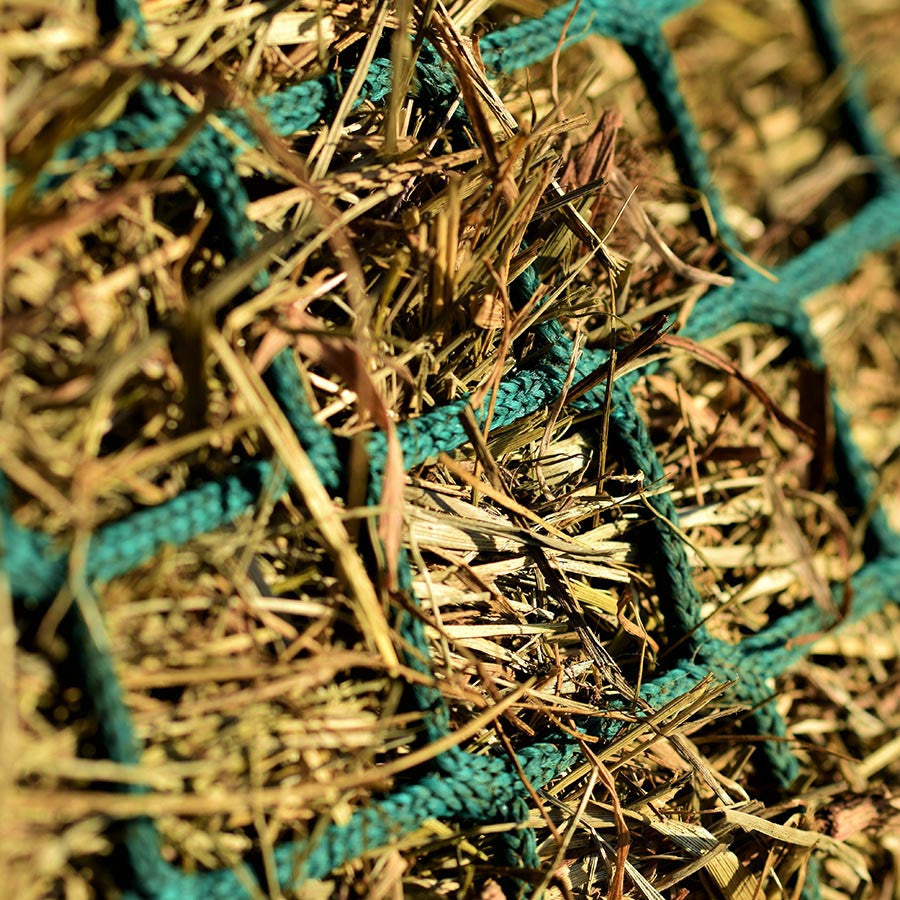
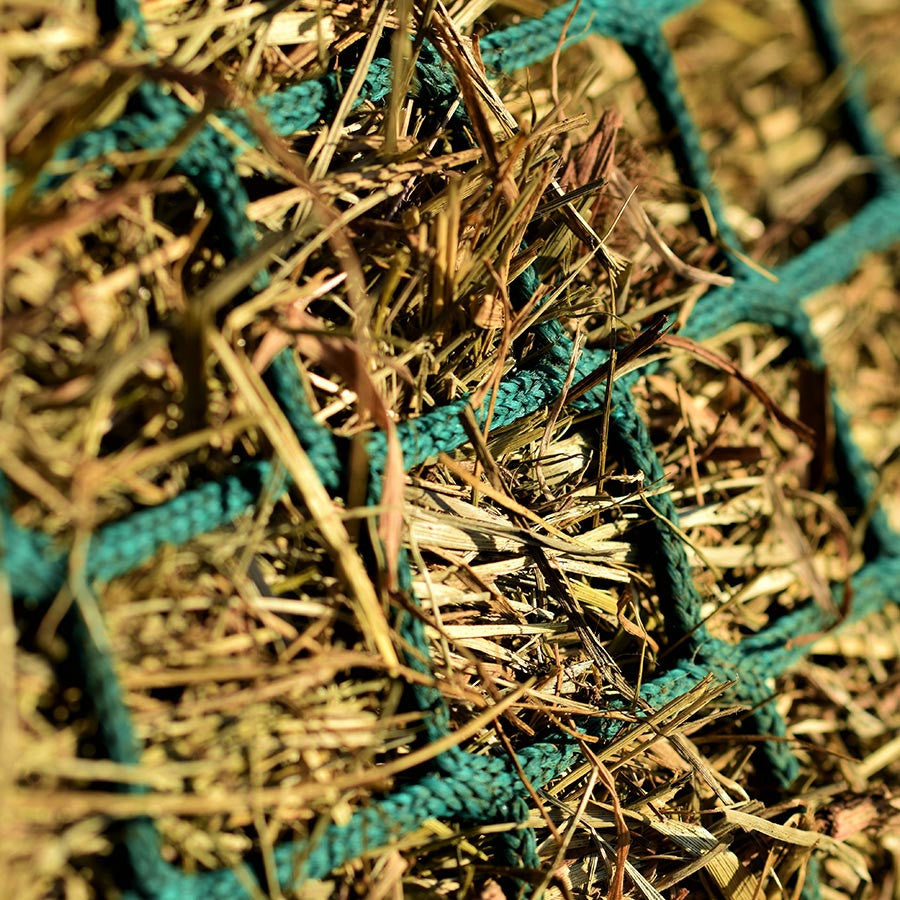
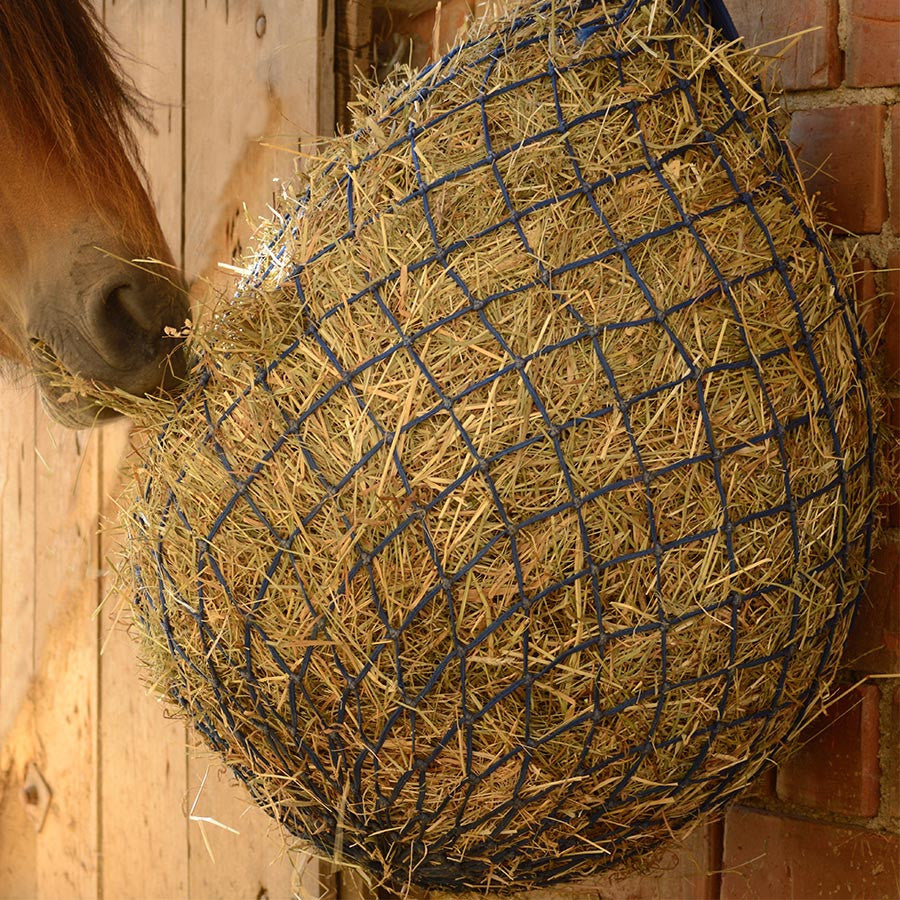
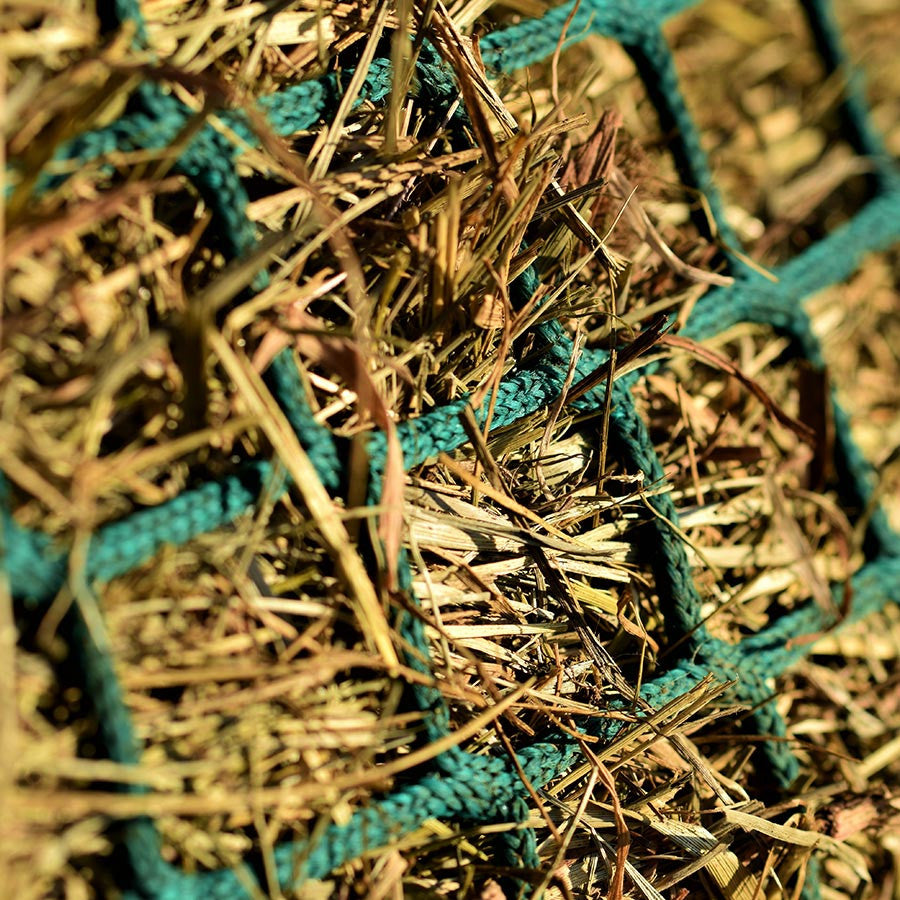
- Hay net
It is easily estimated that the reduction in waste between forage given via a slow feeder and forage given loose on the ground is around 30 to 50%.
At Corderie Gautier, we are experts in the manufacture of nets and ropes.
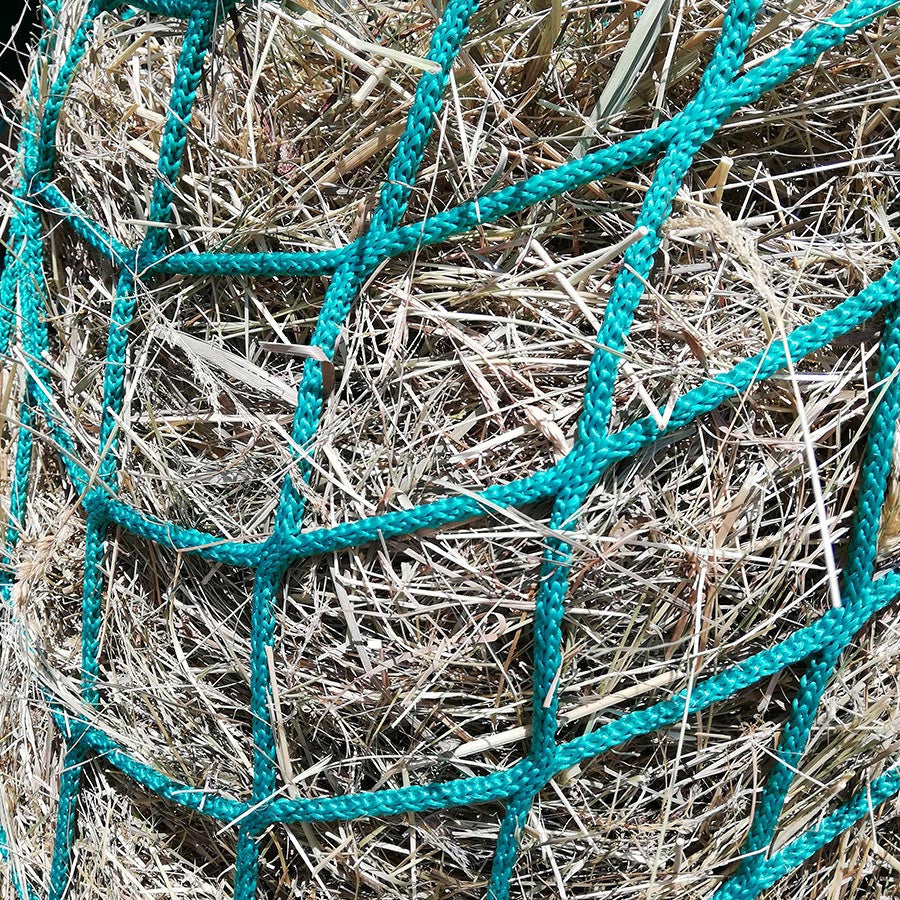
We manufacture high-quality hay nets, with very large meshes to introduce horses to slow feeding, medium, small, or even very small for horses that are accustomed.
The hay net used as a slow feeder comes in several types, shapes, and sizes, to truly adapt to your situation and your horse's needs.
Each animal is unique; it is essential to consider the well-being of your equine companion.
Are you unsure about the type of hay net that suits you?
Contact our team for practical advice and a free quote. You can also find our guide on how to choose a hay net.
Cited in this article